


 English
 中文简体
中文简体
The Short Answer
Online discussions about shower head filters tend to divide into two camps: people who report softer hair and calmer skin, and people who call the product a placebo. Both sides are describing real experiences because the question "do shower head filters work" is missing the second half: work for what? A shower filter can lower chlorine levels and reduce downstream skin and scalp irritation, but it cannot soften hard water, lower total dissolved solids, or disinfect the water. Once that boundary is clear, the product either makes sense for your situation or it does not.
The actual performance comes down to three controllable factors: the filtration medium, the contact time between water and medium, and whether the filter is maintained on schedule. If any of those is wrong, a well-intended product will underdeliver.
What a Shower Filter Can Actually Do
Chlorine reduction is the claim that holds up best. Municipal utilities add free chlorine or chloramine to control microbial regrowth, and hot shower water speeds up their release into the air. You then breathe those compounds while your skin absorbs them through warm, dilated pores. Activated carbon, KDF-55, calcium sulfite, and vitamin C media all react with chlorine and convert it into the far less reactive chloride ion. That is a physical and chemical process you can measure with a test kit, not a vague wellness promise.
The skin and hair benefits are a logical consequence of that chlorine reduction. Chlorine has oxidative properties that strip natural oils from the epidermis and hair cuticle. Many people with sensitive skin, eczema, or chemically processed hair notice less tightness and itching after a few days of filtered showers. This does not mean the filter is adding moisture back into the water; it simply stops a chemical that was wasting your body's own moisture barrier.
There is also an air-quality benefit that often gets overlooked. If your bathroom has a pool-like chemical smell during showers, a filter that removes chlorine will noticeably change that. A shower filter reduces the release of volatile disinfection byproducts into the humid air, so the space feels fresher and less irritating to the airways.
Realistic capabilities of a well-designed shower filter include:
- Reduction of free chlorine and mild reduction of chloramine when using catalytic carbon or KDF-55
- Removal of suspended sediment that causes hazy water or nozzle clogging
- Reduction of some volatile organic compounds responsible for earthy or chemical tastes and smells
- An immediate change in the chlorine smell left on skin and towels
What a Shower Filter Cannot Do
The biggest source of disappointment is the assumption that "filtering" equals "softening". Hard water contains dissolved calcium and magnesium ions that react with soap to form a sticky film on skin and hair. Carbon and KDF media do not remove those ions. An ion-exchange water softener, or in a limited way a shower filter containing softening resin, can change that. A standard carbon shower filter cannot, even if the label mentions "anti-scale" or "hard water".
Total dissolved solids also stay essentially unchanged. If you have well water with a high TDS reading from salts or nitrates, a shower filter will not make the water feel cleaner. That level of dissolved solids is addressed by reverse osmosis or distillation, not by a canister attached to the shower arm.
Microorganisms are another clear boundary. Some filter media are blended with silver or zinc to limit bacterial growth inside the cartridge, but that is a bacteriostatic feature, not a disinfection claim. A shower filter should not be used as a safety device for biologically unsafe water.
How Shower Filter Media Compare
The medium in the cartridge is the starting point for any performance comparison. Each common media type has a different strength, and combining them changes what the filter can handle.
| Medium | Main Target | Mechanism | Typical Life |
|---|---|---|---|
| Activated carbon | Chlorine, taste, odor, some VOCs | Adsorption + catalytic reduction | 3–6 months |
| KDF-55 | Chlorine, chloramine, some heavy metals | Oxidation-reduction (redox) | 6–12 months |
| Calcium sulfite | Free chlorine | Rapid reduction | 3–4 months |
| Vitamin C | Chlorine and chloramine | Ascorbic acid reduction | 2–3 months once exposed |
Multi-stage filters combine several media to cover more contaminants, but every stage creates flow resistance. A well-designed shower filter balances the media volume against an acceptable flow rate. When we manufacture or replace cartridges for water treatment systems, the granular carbon's volume and its contact efficiency are the real predictors of performance, not the number of "stages" printed on the box. This activated carbon filtration guide explains the limits in more detail.
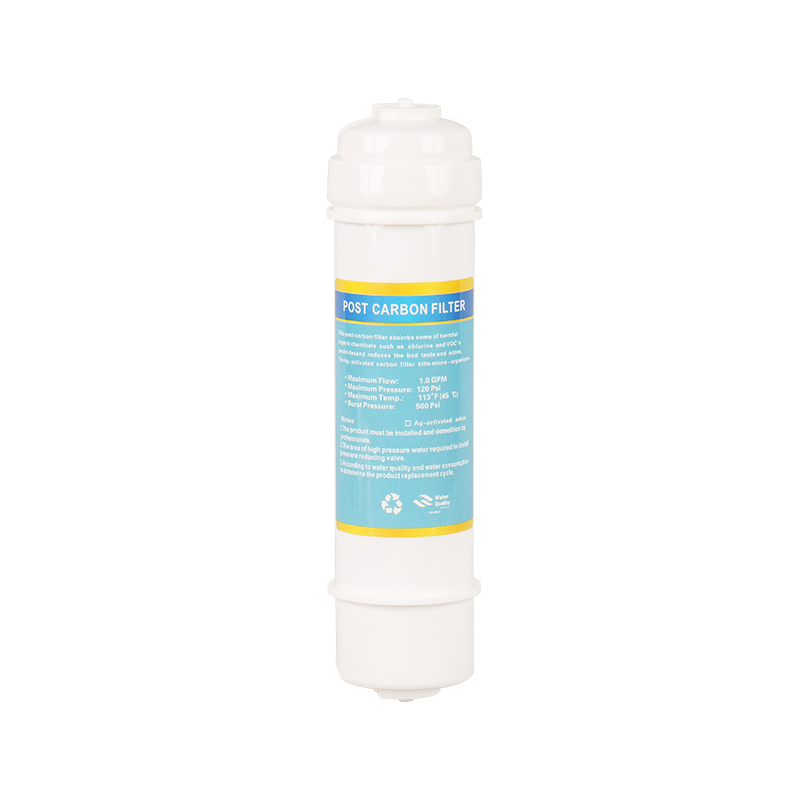 Quick Insert Inline Active Carbon Filter for Shower SystemsThis inline carbon filter is positioned where contact time and media volume determine performance. Its quick-insert design suits users seeking efficient chlorine reduction without sacrificing flow rate.View Product →
Why Some Shower Filters Fail to Impress
Most negative reviews trace back to a design or usage problem, not to the general concept of shower filtration. The first issue is contact time. Water rushes through a small cartridge in less than a second, and if the bed is shallow or the granules are too coarse, much of the water finds a path around the medium. That is why flow rating matters more than housing design. A filter that claims 8 liters per minute while holding less than 5 cubic inches of carbon is not giving the water enough time to react.
The second issue is saturation. Shower filters have a finite chlorine-carrying capacity. Once it is used up, the water passes through with almost no change, and the wet, warm cartridge can become a breeding site for odor and microbes if left too long. The 3–6 month replacement interval is not a marketing timetable; it follows from the typical daily shower volume and the amount of chlorine in municipal water.
The third issue is a mismatch between the product and the problem. A person with 250 mg/L hardness who buys an ordinary carbon shower filter has chosen the wrong tool. If the water still feels sticky after installation, the filter did not fail; the expectation was misaligned. Sediment can also reduce the life of the active media. A sediment prefilter layer or cartridge protects the carbon from coating and extends its effective life in systems with rusty or sandy water.
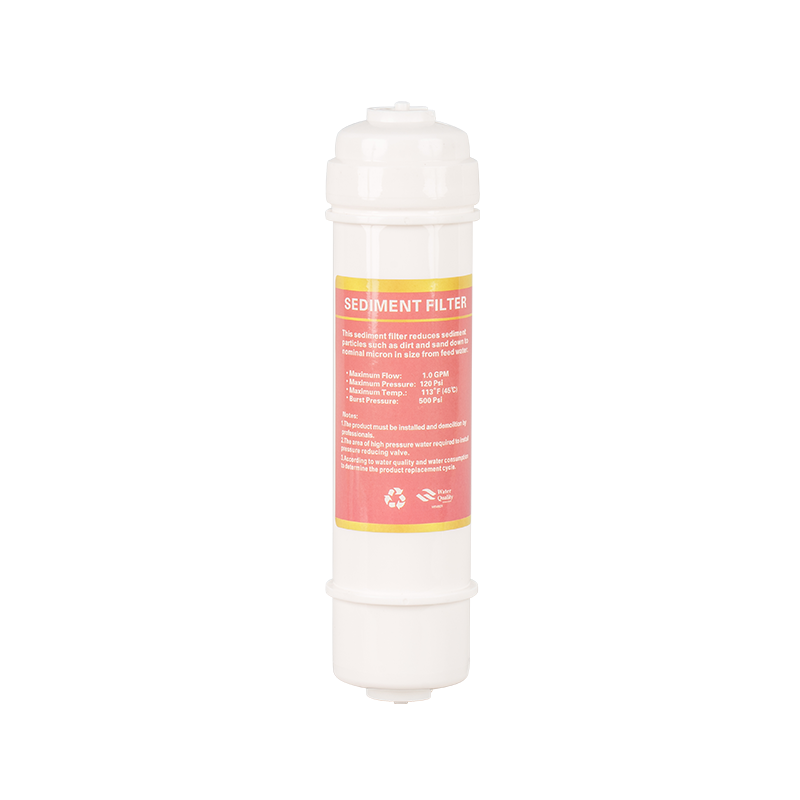 Quick Insert Inline PP Sediment Filter CartridgeThis polypropylene cartridge addresses the sediment issues that can coat active media and shorten filter life. It is a practical choice for rusty or sandy water before carbon filtration.View Product →
What to Look for Before You Buy
Start with your water problem instead of your shopping app. If a chlorine smell or skin and scalp tightness appears after hot showers, a shower filter is a reasonable fix. If hard-water scale is your main complaint, look for a filter with softening resin or consider a whole-house softener. A water test strip that shows only hardness, not chlorine, will steer you correctly.
Check the filter's flow rating against your shower's actual flow. Many filters list a maximum flow that has little to do with their contaminant capacity, so you want the manufacturer to state a capacity in gallons or liters, not just a flow rate. Look for independent verification such as NSF/ANSI 177, which specifically covers chlorine-reduction claims for shower filtration. Very few products on the market carry that certification, and those that do have made a measurable design choice.
Consider whether the filter is a replaceable cartridge or a one-piece shower head. Cartridge-type filters are cheaper to maintain and let you switch media when your water source changes. A well-sealed housing prevents bypass, which is the most common manufacturing fault in cheap filters. As a manufacturer of filter cartridges for household and industrial systems, we see that a good cartridge design, not the fancy shower head, decides whether a filter works over time. If you are evaluating filters for production or replacement use, our water filter cartridge product range shows the component-level choices that affect performance.
The Bottom Line
Do shower head filters work? Yes, for removing chlorine, for reducing the dry skin and brittle hair that chlorine can cause, and for cutting the chemical smell in your bathroom. No, for water softening, for lowering total dissolved solids, or for disinfecting biologically unsafe water. The medium, the cartridge volume, the flow rate, and a timely replacement schedule determine whether the device earns a place on your shower arm. Ignore the hype, match the filter to your actual water chemistry, and maintain it like any other consumable part.

