A Manufacturer Focused on Low-Pressure Flow Control
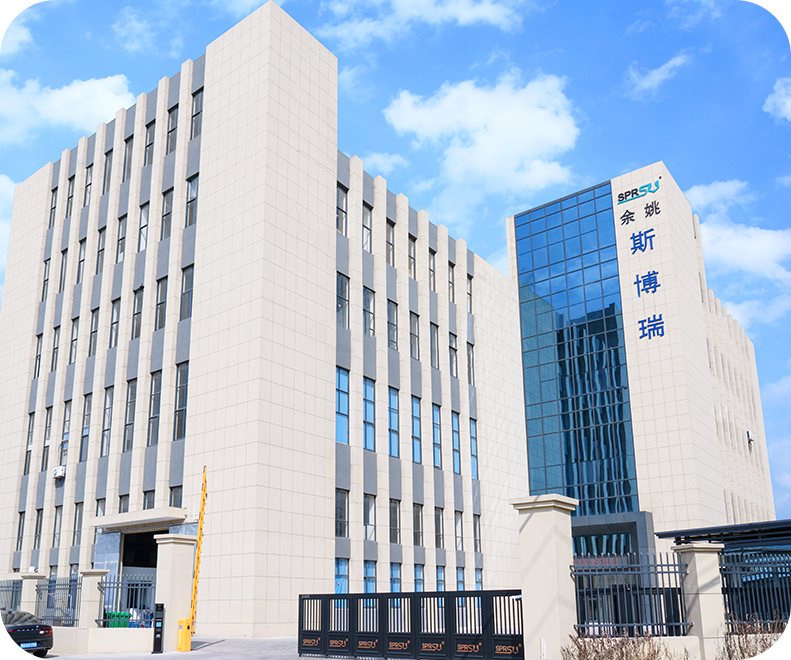
We are Yuyao Spring Water Filter Equipment Co., Ltd., a China-based Pressureless Solenoid Valve manufacturer. Since 2014 we have designed and built solenoid valves in Yuyao, and today the pressureless type is the drain and low-pressure discharge member of the Solenoid Valve range. Because the valve moves the core with electromagnetic force rather than system pressure, it stays predictable when inlet pressure is very low or absent.
The rest of our factory program around this category includes filter cartridges, micro pumps, RO membranes and water filter accessories. That combination matters for OEMs: we can align the valve with the pump and cartridge hardware in the same water path, then pass a single drawing package to production.
Where the Pressureless Solenoid Valve Fits in Our Range
Our solenoid valve family is split by control principle rather than by mounting size. Pilot valves suit normal inlet pressure with small coils; direct-acting valves give positive on/off at low pressure; pressureless versions are for drain, discharge and low-pressure dispensing; Combination Solenoid Valve designs simplify assembly inside water purifiers; pulse valves support timed flushing functions.
Application note: Pressureless solenoid valves are mainly specified for water dispensers and similar equipment with a draining function. They do not depend on external water pressure, which makes them suited to low-pressure environments and open-tank discharge paths.
| Application |
Why pressureless fits |
Configuration focus |
| Water dispensers and drinking appliances |
Low-pressure drain path, opens without supply pressure |
Port type, drain flow rate, duty cycle |
| RO water purifiers and flush circuits |
Stable discharge control through filtration stages |
Coil voltage, response time, mounting orientation |
| Micropump-integrated dosing |
Accurate low-pressure fluid control with minimal interference |
Connector interface, flow path, cycle rate |
| Food and beverage dispensing |
Repeatable on/off control without pressure fluctuations |
Seal material, wetted body, cycle duty |
| Medical and laboratory fluid handling |
Compact, low-pressure and sensitive system compatibility |
Enclosure, seal compatibility, response consistency |
| Industrial automation lubrication and cooling |
Low energy consumption and minimal pressure dependency |
Coil specification, mounting bracket, cycling life |
How We Configure Each Valve
The same pressureless body can be arranged with different coils, seals and port terminations. We start from the functional position in your machine, then define the parameters that affect response and service life.
- Port and connection: quick-fitting, threaded inlet, hose barb, and inside diameter of the flow path.
- Electrical control: AC/DC coil voltage, connector type, cable length and mounting orientation.
- Wetted materials: body, seal and valve core selected for drinking-water compatibility and fluid temperature.
- Cycle duty: length of each opening pulse, switching frequency and expected operating life.
- Environment: ambient temperature, condensation and whether the valve is inside a cabinet or exposed.
- Compliance requirement: the target market and certification set that the finished product must meet.
Materials, Quality and Compliance
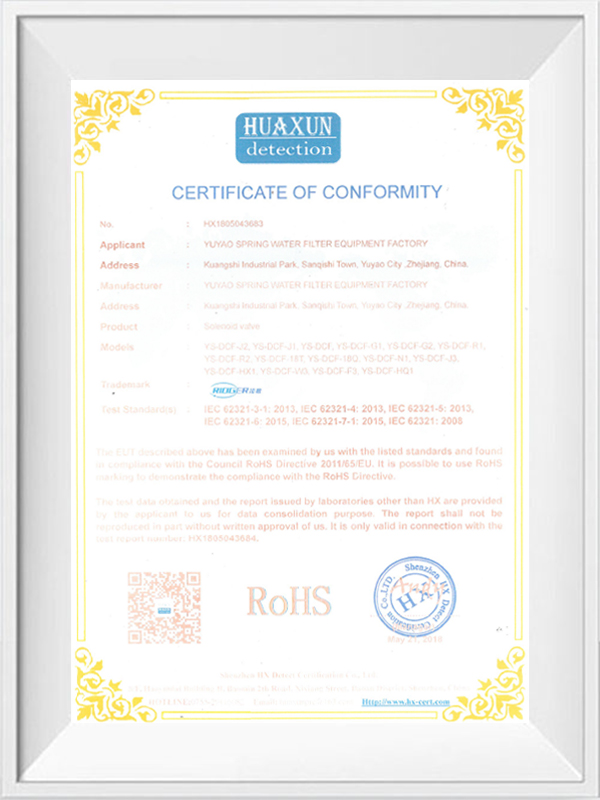
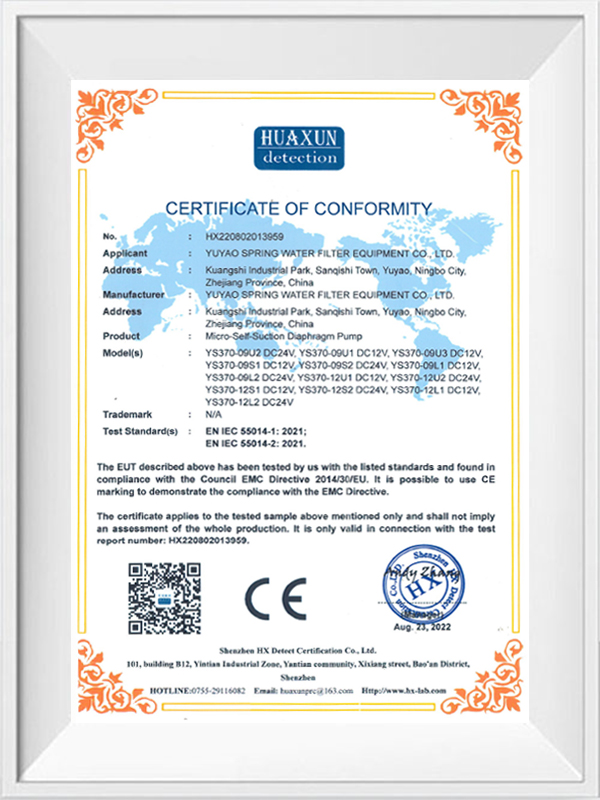
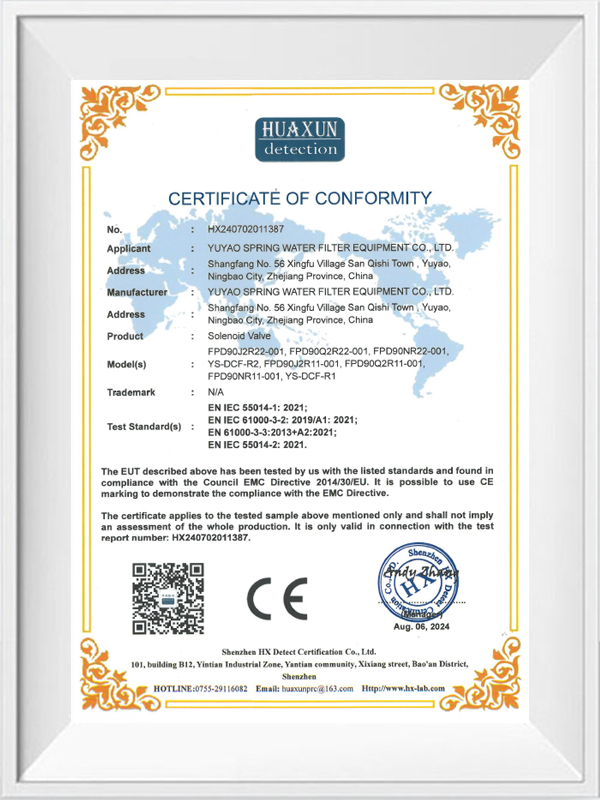
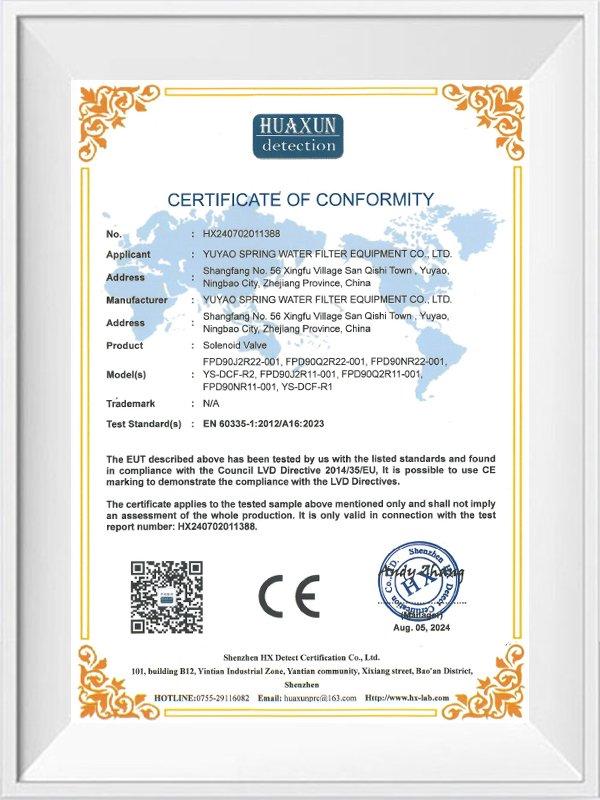
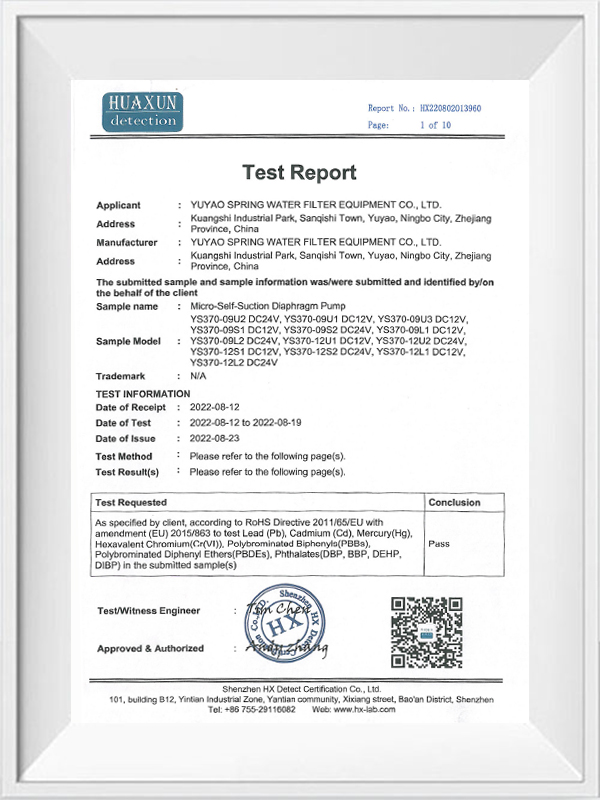
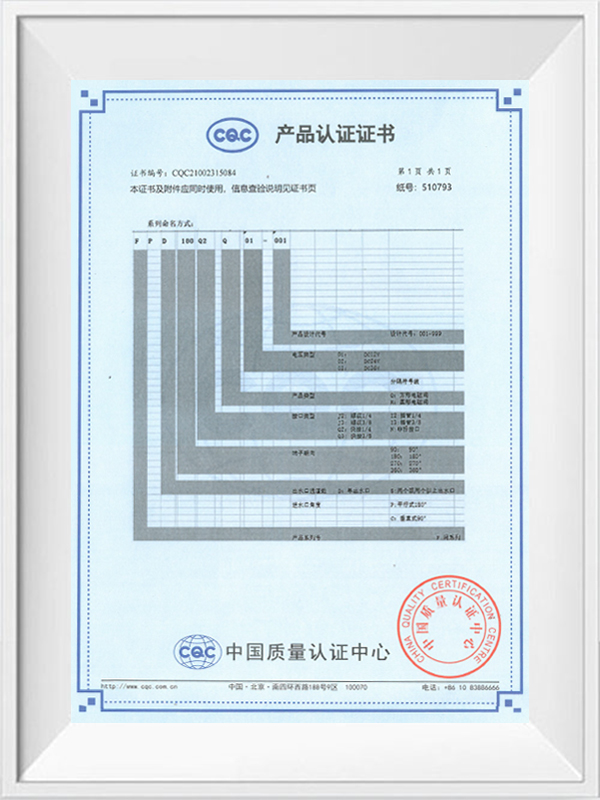
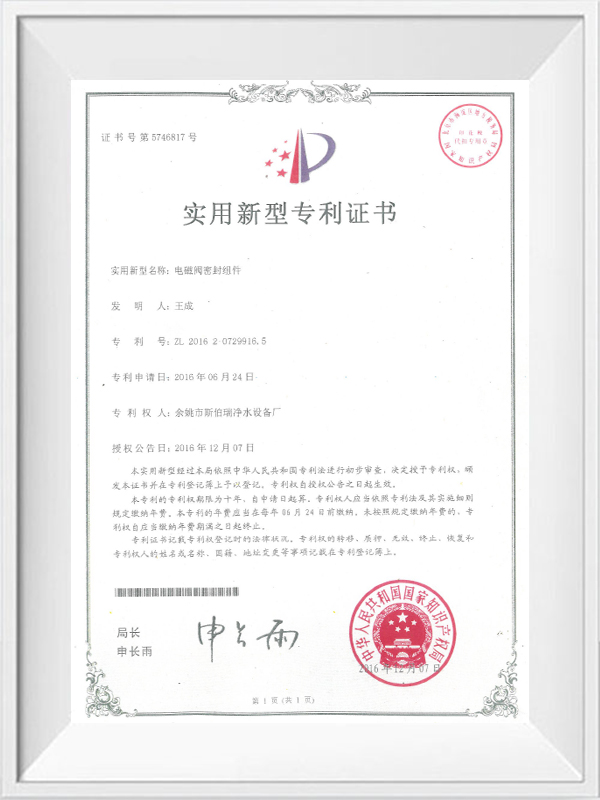
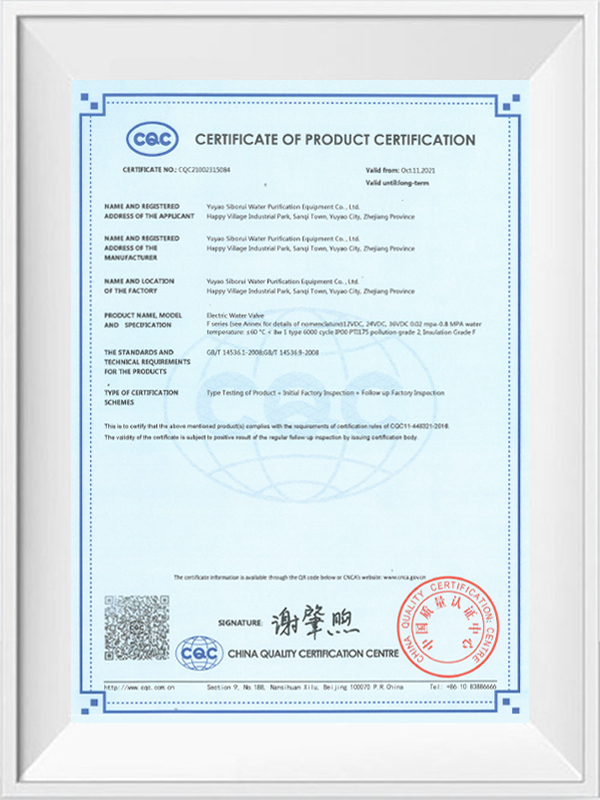
Our products have passed CQC, ROHS and CE testing, and we hold drinking-water approval documents for the relevant product range. The quality system is certified to ISO9001, and more than ten patents cover the pump and valve designs. For solenoid valves, the seal assembly is a controlled component because it determines both leak performance and service life.
The manufacturing base in Yuyao covers 7,000 square meters and includes tooling and production for the valve family. In the years after we first developed solenoid valves in-house, monthly solenoid valve output reached 250,000 units. That scale keeps the pressureless valve line compatible with OEM volume programs as well as smaller customized projects.
Production and OEM Support
Because we build micro pumps and filter cartridges in the same facility, we can coordinate a complete water path rather than only a valve. For a dispenser project, the proposal can cover the inlet/outlet valve, the pump and the filter housing as one assembly scope. Micro Water Pump integration is a common request when a system needs dosing with the pressureless valve.
Customization is handled through the configuration list above. We use the customer's drawing, sample or product brief to fix the mechanical interface, coil winding and packaging before serial production. That step prevents mismatches between the valve and the appliance board.
Installation, Acceptance and Maintenance
Because a pressureless valve works without differential pressure, the main installation considerations are electrical supply, mounting orientation and a clear drain path. Confirm the coil rating matches the control board and that the drain line cannot create backpressure during the opening pulse.
- Keep the valve core axis and coil orientation within the limits of the product drawing.
- Verify the connector lock and seal cleanliness before line connection.
- Cycle the valve with water at actual conditions to confirm open/close response and leak behavior.
- Plan seal inspection according to fluid temperature and cycle count; the seal assembly and coil are the first parts to check if performance shifts.
Information We Use to Configure Your Solution
To return a usable proposal, we need the operating conditions around the valve, not just a flow rate. Provide as much of the following as possible:
- End-product type and the position of the valve in the water circuit
- Working fluid, expected inlet pressure range and target flow rate
- Coil voltage and whether the valve is driven by a PCB, relay or discrete controller
- Port/connection requirements: quick fitting, thread, hose barb, tube diameter
- Duty cycle, switching frequency and required opening time
- Ambient and fluid temperature range
- Drinking-water contact requirement and destination-market certifications
- Packaging, labeling and sample quantity for approval
For retrofit programs, we also ask for a drawing of the existing mounting bracket and clearance envelope. This is what we use to match the valve body and coil orientation to the cabinet layout.
Frequently Asked Questions
What makes a pressureless solenoid valve different from a pilot valve?
A pilot valve uses line pressure to help shift the main seal, while a pressureless solenoid valve uses electromagnetic force directly and therefore works when the inlet water pressure is too low for pilot operation. It is typically placed on the drain/discharge side of dispensers and purifiers.
Can this valve be used for RO inlet control?
For an RO machine inlet, a pilot or direct-acting inlet valve is usually the correct choice. The pressureless version fits the drain and flush side, where water is discharged without relying on supply pressure. We specify by circuit function, so we can supply a matched combination where needed.
What do you need from us for an accurate quotation?
Share the fluid type, pressure range, flow rate, coil voltage, connection size and duty cycle. A product drawing or photo of the mounting area is useful because it lets us confirm the port orientation and space envelope before we propose a configuration.
Do your valves comply with drinking-water requirements?
Our products have passed CQC/ROHS/CE testing, and we hold approval documents for drinking-water contact. For a specific model, the proposal states the compliance evidence that applies to your target market.



 English
 中文简体