Pulse Solenoid Valve manufacturer for water treatment and automation
Yuyao Spring Water Filter Equipment Co., Ltd. designs, develops, manufactures and sells solenoid valves, micro water pumps and filter cartridges from Yuyao City, Zhejiang Province, China. Within the Solenoid Valve family, our Pulse Solenoid Valve range is built for short electrical signals, giving instantaneous response and low power consumption. As a Pulse Solenoid Valve manufacturer, we support projects in automatic irrigation, pneumatic control, water treatment and water purification equipment, including backflushing circuits and multi-valve control panels.
Pulse valves are produced alongside our pilot, direct-acting, pressureless and combination valve lines, with engineering support from drawing review to sample approval and serial delivery.
How pulse solenoid valves work
Pulse solenoid valves are actuated by a short electrical pulse rather than continuous coil energising. The pulse generates a magnetic field that moves the plunger or armature, opens or closes the valve within milliseconds, and releases when the pulse ends. Because the coil consumes power only during the switching action, heat build-up is lower and energy consumption is minimised.
This operating principle makes the valve a good fit for control loops that need fast and repeatable switching. The switching position is defined by the coil stroke, so cycle-to-cycle timing stays consistent. Common applications include automatic irrigation controllers, pneumatic pilot circuits, pulse-jet filter cleaning and backflush sequences in water treatment, using clean water or compatible gases when materials and pressure ratings are matched to the process.
Our solenoid valve range and application fit
Pulse valves are one part of a wider solenoid valve program. The table below shows how each valve construction is normally matched to system needs.
| Valve type |
Construction principle |
Typical application fit |
| Pulse Solenoid Valve |
Short-pulse coil actuation with fast opening and closing |
Automatic irrigation, pneumatic control, water treatment backflushing, pulse-jet cleaning |
| Pilot Solenoid Valve |
Small pilot stage controls a larger valve passage |
Water inlet and auto-flush functions in RO systems and commercial water purifiers |
| Direct Acting Solenoid Valve |
Plunger moves directly with the coil |
Small-flow water circuits, thread inlet valves, low-pressure systems |
| Pressureless Solenoid Valve |
Opens without requiring line pressure |
Gravity-fed dispensers, atmospheric tanks and unstable pressure supply |
| Combination Solenoid Valve |
Multiple functions combined in one body |
Compact purifier and appliance circuits requiring inlet, flush and flow control in one assembly |
For more detailed control principles, see the Pilot Solenoid Valve category and the related valve sections inside our Products range.
Configuration and engineering approach
We configure pulse valves around the actual working point rather than offering only a fixed catalogue. The main selection variables are medium, line pressure, required flow rate, port connection, coil voltage, pulse duration and switching frequency. Our proposal is based on those parameters, and we confirm the valve body, orifice size, seal material and electrical connection accordingly.
- Port connection: thread, quick-insert or custom fitting styles used in water filter and appliance assemblies.
- Coil voltage: matched to the PLC, timer, irrigation controller or relay output.
- Body material: engineering plastic for water-treatment valves and metal-body options for industrial pneumatic or higher-pressure circuits.
- Seals: selected for water, air and compatible media, including drinking-water paths.
- Mounting: in-line, manifold or bracket-mounted according to the equipment layout.
For volume projects we review the complete fluid circuit, including upstream filtration, connector orientation and harness routing, so the valve reaches production with the fewest assembly problems.
Automation integration, installation and service
Pulse valves are simple to integrate with digital control signals. We confirm the actuator response, coil connection and whether a latch-holding feature is useful for battery-powered systems. Multi-valve sets are supplied with consistent electrical characteristics so the controller can drive them without custom power compensation.
During installation, follow the flow direction marked on the body, keep electrical connections dry, and use a supply that meets the coil rating. For pneumatic uses, upstream moisture and particle filtration protect the coil and plunger. For drinking-water systems, flush the circuit after installation and use wetted materials that meet the required contact standards.
- Most common spare parts are coils, seal kits and plunger or core assemblies.
- Replacement components are available against the model code.
- Our documentation includes connection diagrams and torque values for service personnel.
- Isolate the electrical supply before any maintenance and do not operate the valve without the protective cover fitted.
Quality assurance and compliance evidence
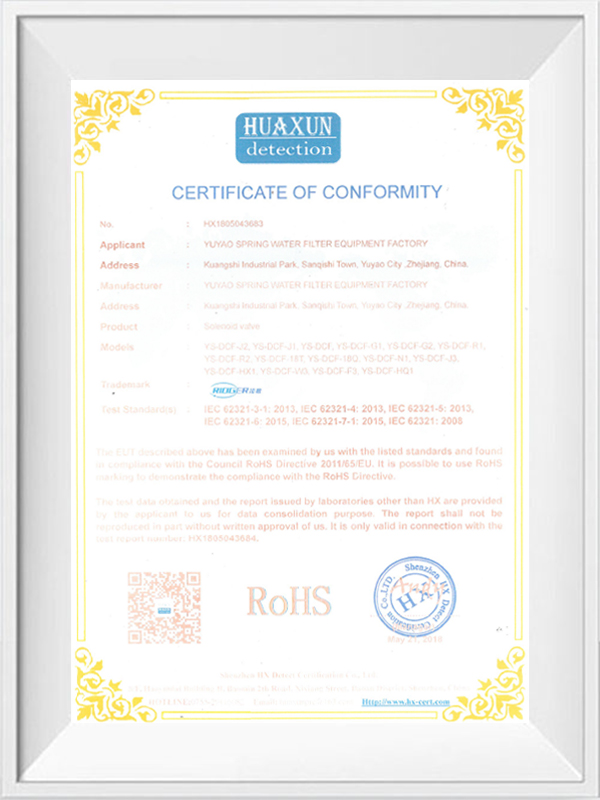
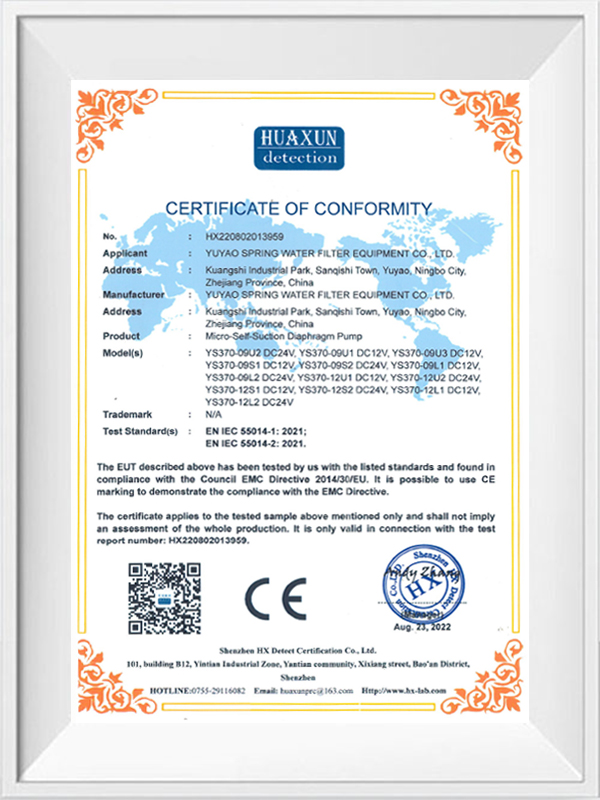
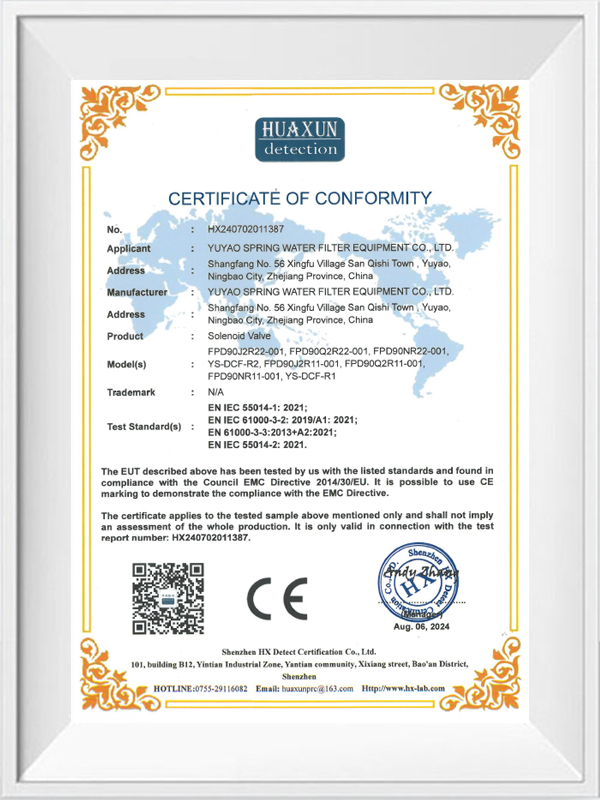
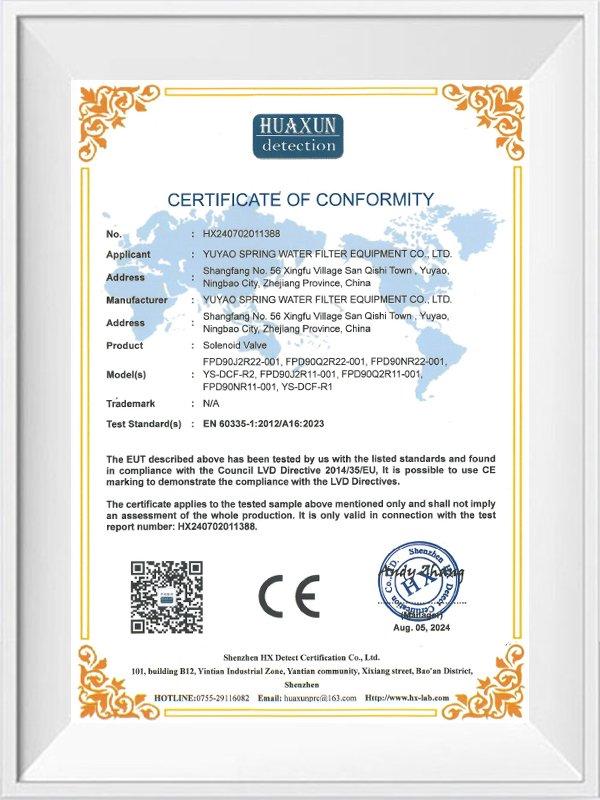
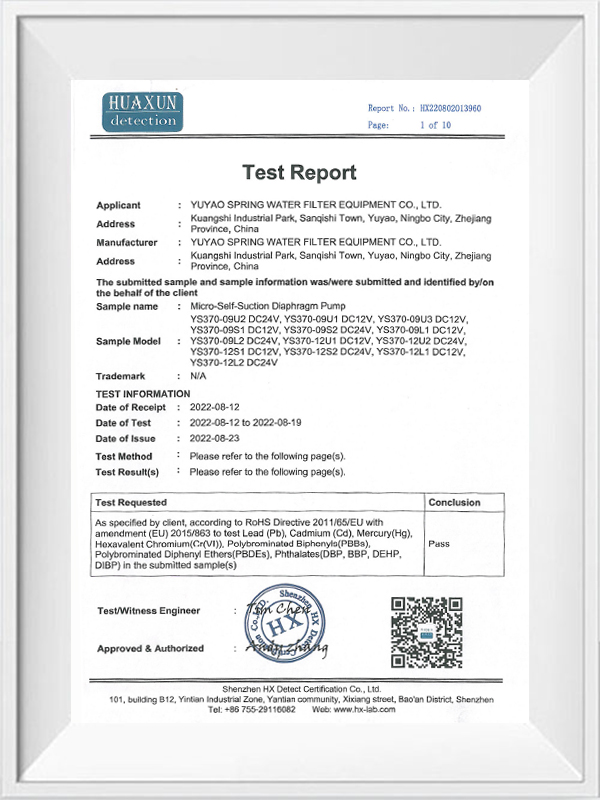
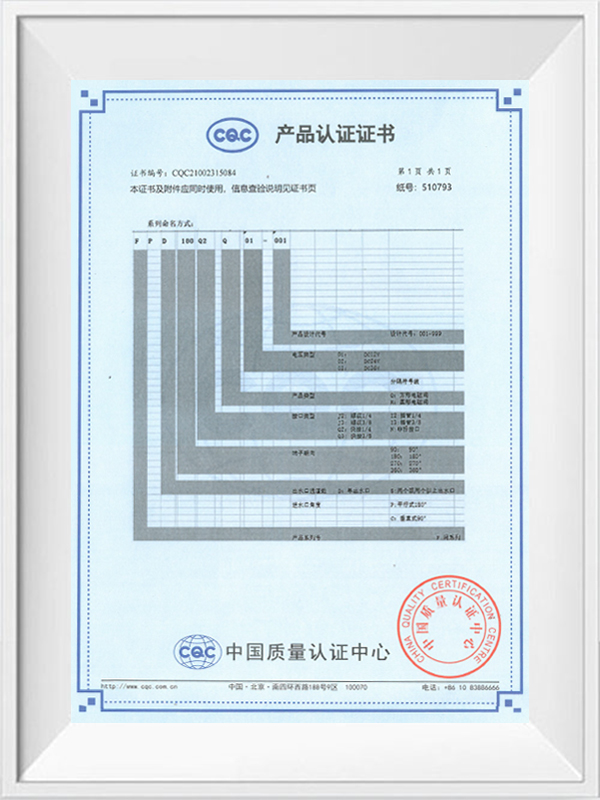
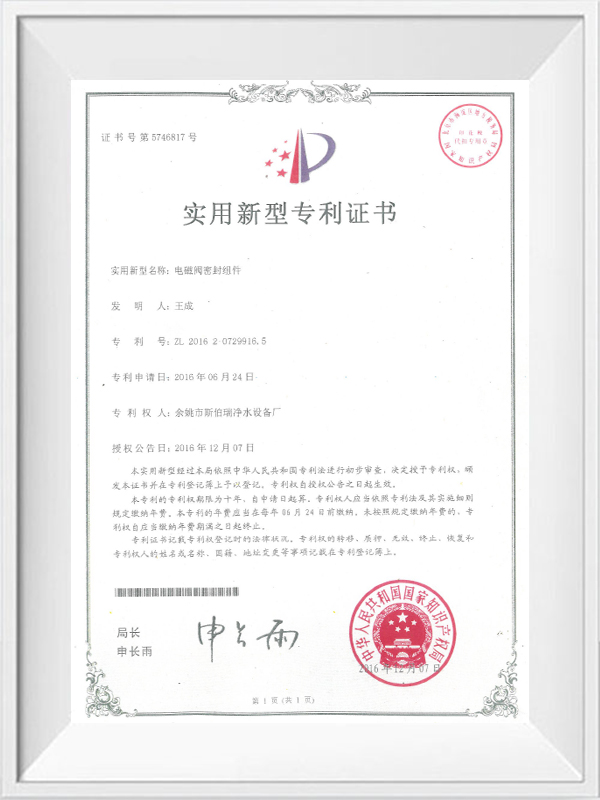
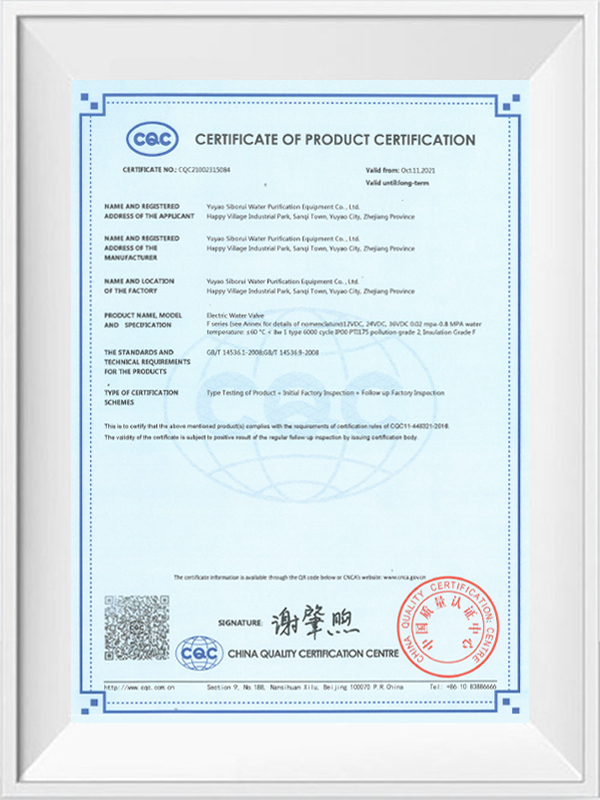
Yuyao Spring Water Filter Equipment Co., Ltd. operates under an ISO 9001 quality control system, holds more than 10 patents for pump and valve products, and has had products tested to CQC, ROHS and CE requirements, with drinking-water approval documents available for relevant models. These certifications are part of the normal technical package we can attach to a quotation.
For custom pulse solenoid valves, we agree the inspection and acceptance method before serial production. Dimensional checks, electrical continuity and pressure leakage testing are typical acceptance points, and batch test reports can be arranged for projects that require them.
Factory capability and delivery
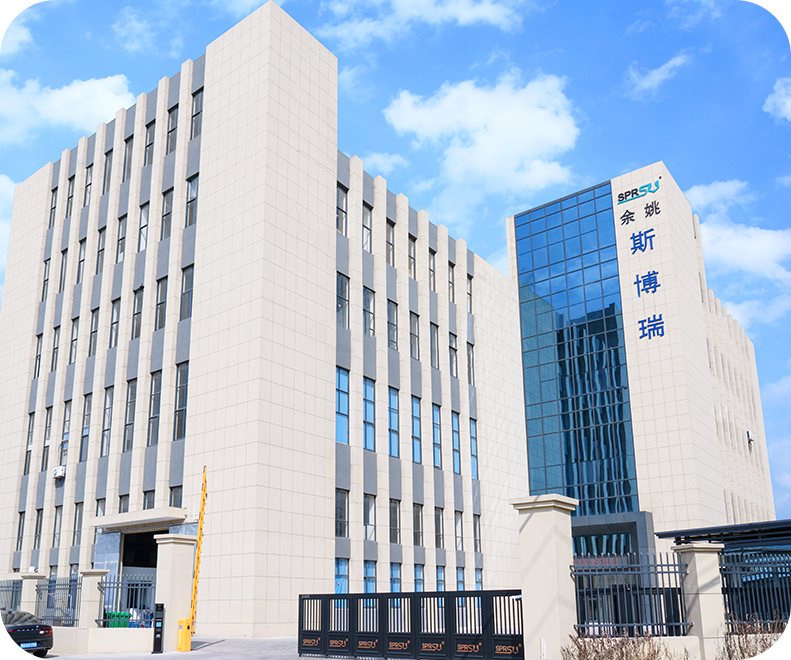
We are a manufacturing company with solenoid valve development and production inside our Yuyao facility. Since our establishment in 2011, we have built a 7000 square metre plant and a track record of monthly solenoid valve output reaching 250,000 units. That scale supports sample development, pilot runs and serial production for customers in America, Europe, Africa, Korea and Southeast Asia.
Export packaging is arranged to protect coils and plastic bodies during sea or air freight. After production, we coordinate packing lists, shipping marks and the technical documents required for customs clearance in the destination market.
Information we use to configure your solution
Project input we need:
- Application type: water purifier, irrigation, pneumatic control, pulse-jet cleaning or other automated system
- Medium, operating pressure and temperature range
- Required flow rate or valve orifice and port size
- Port connection style and thread or tube size
- Coil voltage, pulse width and controller output type
- Duty cycle, switching frequency and expected service life
- Mounting position and available space envelope
- Certification and documentation requirements for the target market
- Order quantity, sample needs and delivery destination
Frequently asked questions
What distinguishes a pulse solenoid valve from a standard solenoid valve?
A pulse valve is driven by a short electrical signal. The coil opens or closes the valve quickly and then releases, so the valve does not need to remain energised. This reduces power demand and heat, which is useful in battery-powered and continuously cycling systems.
Can a pulse solenoid valve control the backflushing of a water filter?
Yes. In water treatment, pulse valves are commonly used to switch backflush water through filter housings or to sequence several filter stations. The fast response makes the switching action predictable, and the low power demand suits automatic control panels.
What information do you need before quoting?
We need the medium, working pressure, port size, coil voltage, mounting position, control signal and target market. With those inputs we can propose a valve construction, wetted materials and electrical configuration. For a water purifier project, tell us the flow path and whether the valve is used for inlet or flush.
Are your pulse valves suitable for drinking-water systems?
Models intended for drinking-water contact are produced with materials that meet the applicable approval requirements. We can provide the relevant CQC, ROHS, CE and drinking-water approval evidence for the specified model during quotation.
Can you customise coil voltage and connectors for our control board?
Yes. We coordinate coil voltage, connector type, wire length and mounting brackets with the customer's control board. Customisations are reviewed against the valve body design and confirmed before sample production.



 English
 中文简体