


 English
 中文简体

PFAS, or per- and polyfluoroalkyl substances, are a large family of synthetic chemicals that have been used for decades in nonstick coatings, water-resistant fabrics, food packaging, firefighting foams, and many industrial processes. They are sometimes called “forever chemicals” because they do not break down easily in the environment. That persistence is why PFAS can appear in source water, and why addressing them requires a measured, practical approach rather than a single gadget or a rushed purchase.
If you are responsible for a household water supply, a small business, or a water treatment system, the goal is straightforward: understand whether PFAS are present, how much is there, and which treatment steps can reliably reduce them. It also helps to remember that PFAS are not one chemical but many. Long-chain and short-chain compounds behave differently, and a treatment train that works well for one water profile may underperform in another.
Start with Your Water, Not a Product Label
Before choosing a filter, find out what is in the water. If your water comes from a public supply, read the latest water quality report and check whether the utility has tested for PFAS. Regulators in many regions are tightening reporting requirements, but the details vary widely. If you use a private well, testing is your responsibility, and it is worth repeating after nearby land-use changes, flooding, or well repairs.
Use an accredited laboratory and a drinking-water method suited to PFAS. A useful report will list individual compounds, not just a single total, and will state the reporting limit. PFAS results are commonly expressed in parts per trillion, which is an extremely small concentration. That does not automatically make a result harmless, but it does mean that sampling method and laboratory quality matter.
| What the result shows | What it may mean | Practical next step |
|---|---|---|
| No PFAS detected above the reporting limit | The water may be below the test limit, or the source may change over time | Keep the report, repeat testing if the source or local rules change, and protect the well or intake |
| Low-level detection of PFOA, PFOS, or related compounds | Some regulators set very low drinking-water limits, often in the parts-per-trillion range | Compare the result with current local guidance and evaluate point-of-use treatment |
| A mixture that includes short-chain PFAS | Carbon alone may be less effective for some short-chain compounds | Ask a treatment specialist about reverse osmosis, anion exchange, or a combined train |
| Elevated result in a private well | Well construction, nearby activities, or source water may be contributing | Use an alternate supply while planning, inspect the well, and retest treated water after installation |
Understand the Exposure Pathway Before You Treat
Drinking water is one exposure route for PFAS, but it is not the only one. Food packaging, indoor dust, and some consumer products can also contribute. For water treatment planning, however, the focus is usually drinking, cooking, and sometimes beverage preparation. A point-of-use system at the kitchen tap can be a practical choice for many homes because it treats the water people actually consume without the cost and waste of treating every liter used for laundry or irrigation.
Whole-house treatment may be considered in larger buildings or specific applications, but it needs a clearer justification. It also creates a larger spent-media stream and can be more expensive to maintain. Before sizing anything, gather the basics: peak flow rate, daily volume, water pH, hardness, chlorine or chloramine level, total dissolved solids, and available space. These details determine contact time, pretreatment, membrane selection, and replacement intervals.
- Set a clear treatment goal based on local guidance and the tested compounds.
- Protect the treatment stages with sediment and chlorine control where needed.
- Plan for spent carbon, resin, and membrane concentrate before installation.
- Verify performance with a treated-water test after commissioning.
Treatment Options That Can Reduce PFAS
No single technology removes every PFAS under every condition. Claims should be supported by independent testing, and the system design matters as much as the media inside it. Contact time, flow rate, water chemistry, and maintenance all influence performance.
Granular Activated Carbon and Carbon Block
Granular activated carbon, or GAC, adsorbs many organic compounds, including some longer-chain PFAS. Performance depends on the carbon type, empty bed contact time, water chemistry, and replacement schedule. Organic matter and chlorine can compete for adsorption sites, so a carbon stage that works well in one supply may exhaust faster in another. Carbon block filters can also reduce some PFAS when they are specifically tested for that purpose, and they are often used to protect downstream reverse osmosis membranes.
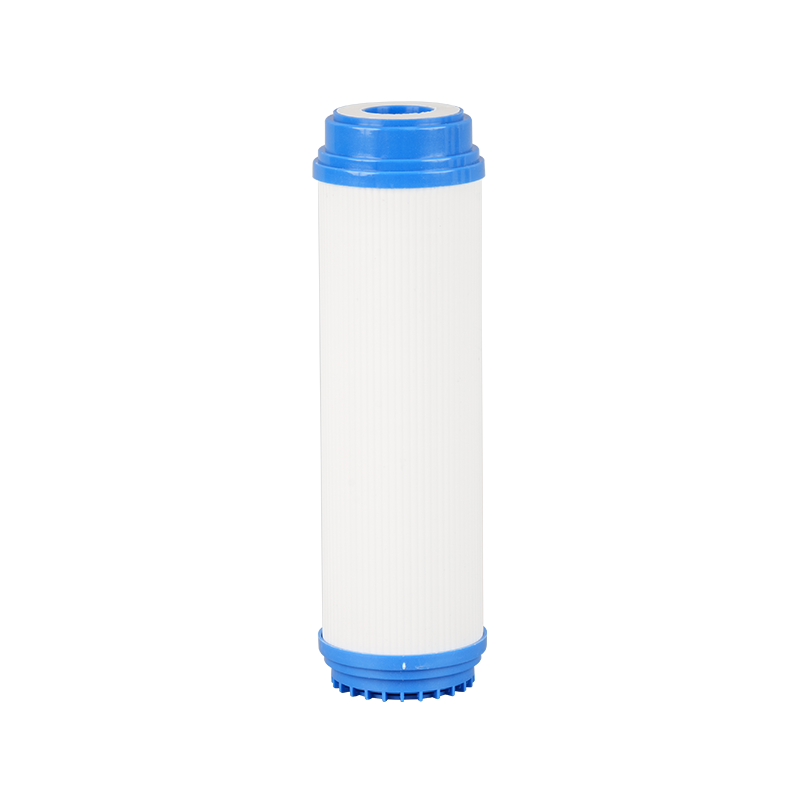 10-Inch Granular Activated Carbon Filter CartridgesGranular activated carbon cartridge for reducing chlorine, odor, and organic compounds in residential or commercial systems; verify contact time and replacement schedule.View Product →
A granular carbon cartridge is a familiar building block in household and light commercial systems, but the label alone is not enough. The useful questions are how much contact time the housing provides, what the media is tested to reduce, and how often it must be changed. For a deeper look at how carbon behaves in water treatment, our activated carbon filtration guide explains the fundamentals.
Carbon block pretreatment is often placed before a membrane to reduce chlorine, sediment, and taste-and-odor compounds. That protection can extend membrane life, but it should not be treated as a complete PFAS barrier unless the product has been tested and certified for the compounds of concern.
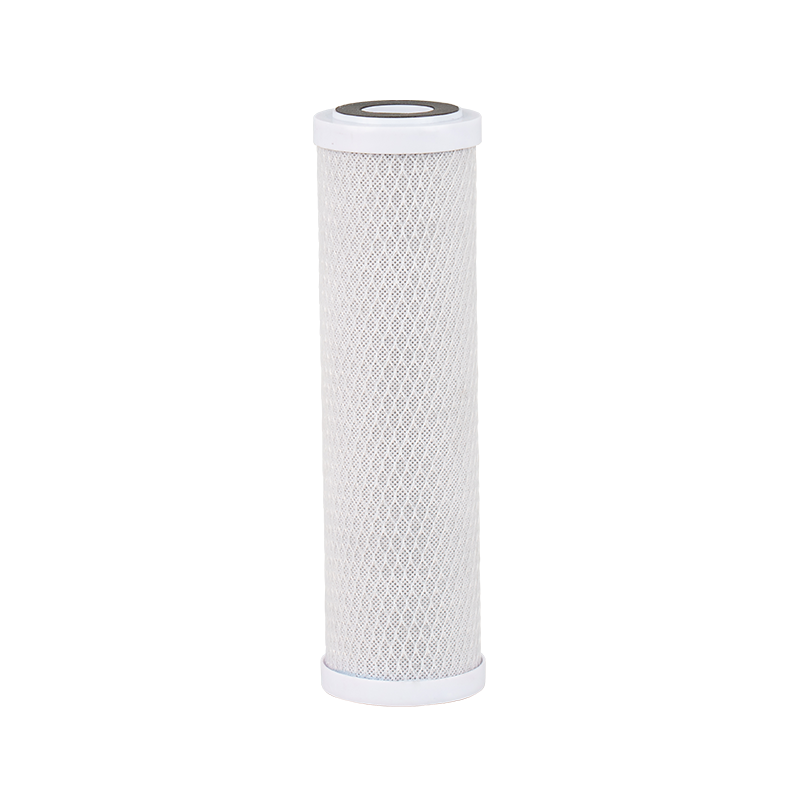 10-Inch CTO Carbon Block Pre-Filter CartridgesCarbon block pretreatment cartridge for chlorine, odor, VOCs, and organics; useful ahead of RO membranes but not a verified PFAS barrier by itself.View Product →
Reverse Osmosis
Reverse osmosis is effective at rejecting many PFAS because the membrane passes water molecules while rejecting larger dissolved species. A well-designed household RO system can reduce a broad range of contaminants, including many PFAS, but it needs sediment and carbon pretreatment to protect the membrane. It also produces concentrate that must be managed according to local rules, and its recovery depends on pressure, temperature, and system design.
For point-of-use drinking water, an under-sink RO system with carbon pretreatment and post-carbon polishing is a common approach. Post-treatment carbon can improve taste, while a mineral cartridge can adjust the final water profile. The key is to verify PFAS reduction with a treated-water test rather than assuming that every RO system performs the same way.
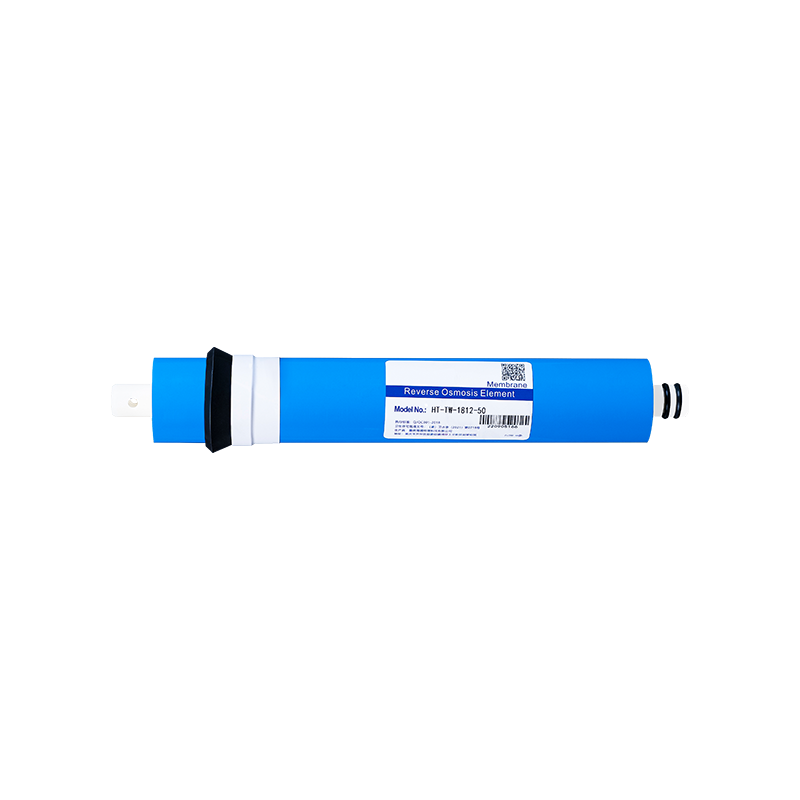 Household Reverse Osmosis Membrane ElementsRO membrane elements for household purifiers, offered in multiple flow rates and 96–98% salt rejection; confirm PFAS reduction with treated-water testing.View Product →
Anion Exchange and Other Options
Anion exchange resins can capture some short-chain PFAS that carbon handles less effectively. Specialized exchange media and single-use resins are available, but regeneration and disposal need careful planning. Boiling water is not a PFAS treatment; it can concentrate the very compounds you are trying to reduce. Aeration is also not a reliable PFAS removal step for drinking water. If a supplier promises a simple fix, ask for test data, the test conditions, and a plan for spent media.
Design a Simple Treatment Train
A practical PFAS plan usually combines several modest steps rather than relying on one heroic stage. For a household point-of-use system, a sediment prefilter, carbon block or GAC stage, RO membrane, post-carbon polisher, and optional mineral cartridge form a logical sequence. Each stage has a job: protect the next stage, reduce the target compounds, and make the final water acceptable to drink.
- Use sediment filtration to protect carbon and membrane stages from particles.
- Size carbon for adequate contact time and realistic replacement intervals.
- Choose RO where short-chain PFAS or very low treatment targets require it.
- Polish the treated water with carbon and adjust mineral content if desired.
- Confirm performance with a laboratory test after commissioning.
For larger systems, reliable inlet valves, flush valves, micro pumps, pressure switches, and pressure gauges help keep flow and pressure within the design range. Those components may seem secondary, but unstable pressure and poor flow control can shorten membrane life and make treatment performance unpredictable. Our own experience is in these unglamorous details: filter cartridges, membranes, solenoid valves, and micro pumps that keep water systems working as intended.
Maintenance, Testing, and What Not to Do
PFAS treatment is not fit-and-forget. Carbon exhausts, membranes degrade, and resin becomes saturated. Monitor pressure drop, flow rate, run time, and membrane rejection where applicable. Replace stages according to the system design and the actual water quality, not only by calendar date. Test treated water at commissioning and then at a sensible interval, especially if the source changes, a well is repaired, or a new industrial activity appears nearby.
- Do not rely on taste or odor to judge PFAS removal; these compounds are not reliably detectable by the senses.
- Do not boil water as a PFAS remedy; boiling can concentrate non-volatile contaminants.
- Do not install carbon or resin without a plan for spent media and waste disposal.
- Do not mix components without checking compatibility, flow direction, and pressure limits.
- Do not ignore source protection; well casing, caps, backflow prevention, and land-use controls still matter.
If there are infants, pregnant people, or people with health concerns in the household, check current advice from the local health authority and consider an alternate water source while treatment is being planned. A calm, documented approach is easier to maintain than a hurried purchase that no one knows how to service.
A Practical Path Forward
Addressing PFAS in a water supply starts with information: a current water report, a reliable test, and a clear treatment goal. From there, choose a treatment train that matches the water chemistry and the compounds present. Carbon can be useful, reverse osmosis can reduce many PFAS, and anion exchange can help with harder-to-treat short-chain compounds. The details, however, decide the outcome.
As a manufacturer of filter cartridges, membranes, solenoid valves, and micro pumps since 2011, we tend to see PFAS treatment as a system problem rather than a single-cartridge problem. If you are specifying a household system, a light commercial unit, or a component set for a larger water treatment product, our team can help you compare options and plan a serviceable configuration. Contact our team with your flow rate, water test, and treatment target, and we will help you move from concern to a practical next step.

