


 English
 中文简体
中文简体
Activated carbon is one of the most widely used filtration media in water treatment. It appears in pitcher filters, under-sink reverse osmosis systems, and large municipal plants alike. The reason is simple: activated carbon is very effective at removing chlorine, improving taste and odor, and trapping a broad range of organic contaminants. But what actually happens when water flows through a bed of black granules? The answer lies in a process called adsorption and in the remarkable internal structure of activated carbon. This article explains how activated carbon works in water treatment, what it can and cannot remove, and how carbon cartridges fit into a purification system.
What Makes Activated Carbon "Activated"?
Activated carbon begins as a carbon-rich raw material such as coconut shell, coal, wood, or peat. The material is first carbonized at high temperature in a low-oxygen environment, driving off volatile components and leaving behind a carbon char. It is then activated by exposing it to steam, hot air, or chemical agents at high temperature. This second step creates an extensive network of micropores, mesopores, and macropores throughout the carbon structure.
Those pores give activated carbon its extraordinary capacity. A single gram of quality activated carbon can have a surface area of 500 to 1,500 square meters. In practical terms, a small handful of carbon can expose an area comparable to a football field several times over. This enormous surface area is where contaminant capture actually occurs.
| Raw Material | Pore Character | Typical Application |
|---|---|---|
| Coconut shell | High micropore content | Taste and odor control |
| Coal-based | Broad pore size distribution | Municipal and industrial |
| Wood-based | Larger pores | Color and organic removal |
Adsorption vs. Absorption: How the Chemistry Works
The key to understanding activated carbon is the difference between adsorption and absorption. When a sponge soaks up water, the water is absorbed into the body of the sponge. Activated carbon works by adsorption: contaminants stick to the surface of the carbon instead of entering its interior. Because the internal surface area is enormous, even a small quantity of carbon can retain a surprisingly large amount of contamination.
Two adsorption mechanisms are at work. Physical adsorption relies on weak intermolecular forces, known as van der Waals forces, between the carbon surface and the contaminant molecule. It is fast, generally reversible, and is the dominant mechanism for most organic compounds. Chemical adsorption involves a stronger interaction, closer to a chemical bond, between the contaminant and the carbon surface or an impregnated chemical. It is more selective and holds contaminants firmly.
| Feature | Physical Adsorption | Chemical Adsorption |
|---|---|---|
| Driving force | Van der Waals forces | Chemical bond formation |
| Reversibility | Generally reversible | Typically irreversible |
| Selectivity | Broad, non-specific | More specific targets |
| Typical targets | VOCs, taste and odor | Chlorine, chloramine, some metals |
In practical water treatment terms, these mechanisms make activated carbon especially effective for non-polar organic molecules with low to moderate molecular weight. This includes the disinfectants that municipalities commonly add to drinking water and the organic compounds responsible for unpleasant taste and odor.
What Activated Carbon Removes and What It Does Not
It is important to set realistic expectations. Activated carbon is excellent for some contaminants and ineffective for others. It does not soften water, and it is not a reliable filter for dissolved minerals or microorganisms.
| Category | Examples |
|---|---|
| Disinfectants and by-products | Chlorine, chloramine, trihalomethanes |
| Taste and odor compounds | Geosmin, 2-MIB, organics |
| Organic chemicals | VOCs, pesticides, herbicides, solvents |
| Some heavy metals | Lead, mercury with specialty media |
| Emerging contaminants | Certain PFAS with catalytic media |
On the other side of the ledger, activated carbon does not reliably remove dissolved minerals such as calcium and magnesium, sodium, nitrate, or fluoride. If you need to reduce hardness or remove dissolved salts, carbon should be paired with another technology, such as a reverse osmosis membrane or an ion exchange resin.
The Main Forms of Activated Carbon in Water Treatment
Activated carbon is produced in several forms, and each form suits a particular treatment duty.
- Powdered activated carbon (PAC) is a fine powder used mainly in municipal plants for seasonal taste and odor events. It is dosed into water and later removed by clarification or filtration.
- Granular activated carbon (GAC) consists of irregular grains that can be packed into filter beds or inside replaceable filter cartridges. It allows high flow and is widely used in household and commercial systems.
- Carbon block (CTO) filters are made of fine carbon particles fused into a solid block. The block adds mechanical filtration and creates very fine pores that improve contact between water and carbon.
- Catalytic carbon is activated carbon that has been specially treated to improve removal of chloramine and hydrogen sulfide.
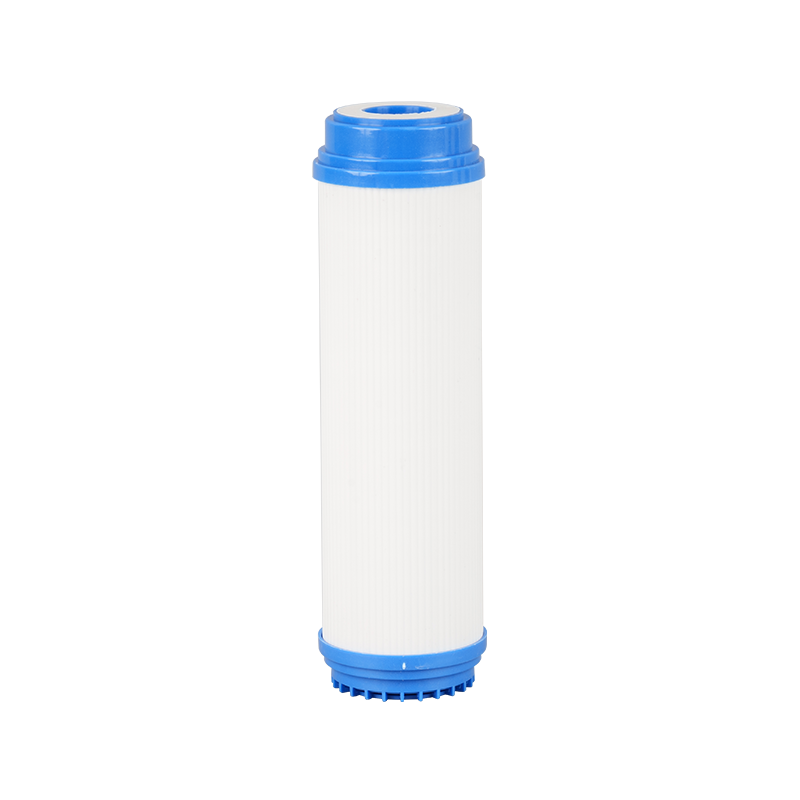 10-Inch Granular Activated Carbon Filter CartridgeA standard-sized carbon cartridge suited for standalone use or as a prefilter before an RO membrane. It provides effective chlorine removal while protecting downstream components from damage.View Product →
For a standard point-of-use or point-of-entry application, a 10-inch granular activated carbon cartridge is a practical and cost-effective choice. It can be installed as a standalone carbon stage or placed before a reverse osmosis membrane to protect the membrane from chlorine damage.
How Carbon Cartridges Fit into a Treatment System
Activated carbon rarely works alone in a modern water treatment system. In a typical household reverse osmosis unit, carbon appears in two positions: before the membrane and after it. The RO membrane rejects dissolved salts and other impurities, but it is easily damaged by chlorine and chloramine. A carbon prefilter protects the membrane, while a small post-carbon cartridge polishes the water before it reaches the tap.
- Sediment prefilter (PP cotton) removes sand, rust, and suspended particles.
- Carbon prefilter (GAC or CTO block) removes chlorine, chloramine, and organic compounds that would otherwise shorten membrane life.
- Reverse osmosis membrane removes dissolved solids, heavy metals, and most remaining impurities.
- Post-carbon filter (T33) removes residual taste and odor and polishes the final water.
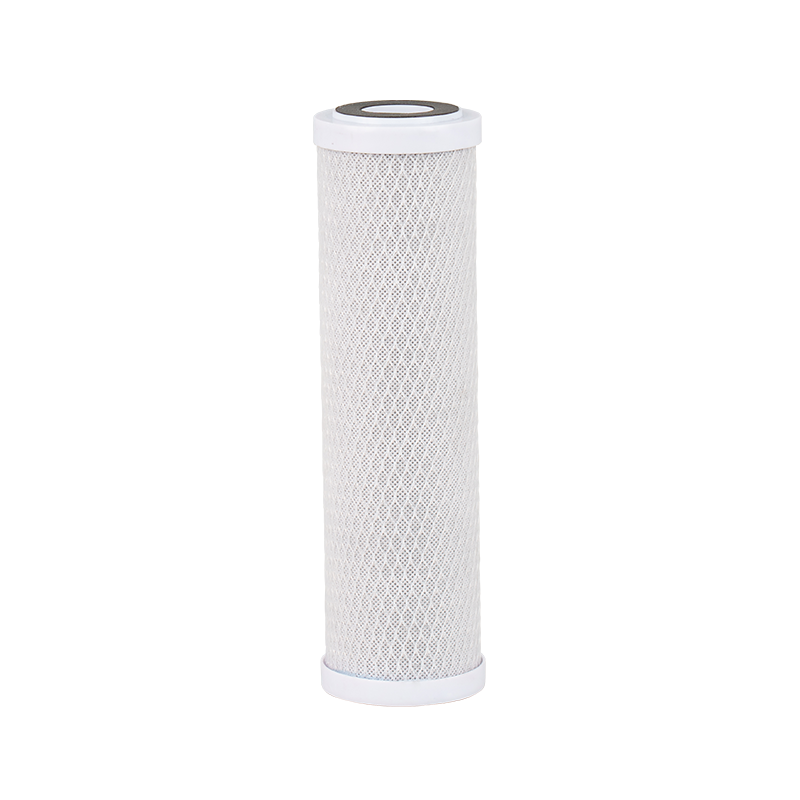 10-Inch CTO Pre-Block Carbon Filter CartridgeDesigned for use as a carbon prefilter in reverse osmosis systems. This cartridge protects the RO membrane from chlorine and chloramine, ensuring reliable system performance and longer membrane life.View Product →
This staged arrangement explains why carbon is often described as a prefilter and a polishing filter rather than the only filter. Each stage has a specific job, and carbon handles the chemical and taste side of the equation. If you are designing or replacing a system, you can compare the options in our water filter cartridge lineup.
Getting the Most from a Carbon Filter
Choosing the right carbon cartridge is only half of the job. From our years of producing water filtration components, we have learned that the other half is correct sizing and timely replacement. A few practical points make a significant difference in performance.
- Match the media to the contaminant. Standard GAC is ideal for chlorine and general taste and odor; catalytic carbon is better for chloramine; carbon block adds particulate retention.
- Respect contact time. Adsorption takes time. If water flows through the cartridge too quickly, contaminants do not have enough time to reach the carbon surface.
- Change cartridges before they become exhausted. Once the adsorption capacity is used up, contaminants can pass through, and a saturated carbon filter can even become a site for bacterial growth.
- Watch for warning signs. A return of chlorine taste or smell, a noticeable drop in flow rate, or an increased pressure drop all suggest that the cartridge should be replaced.
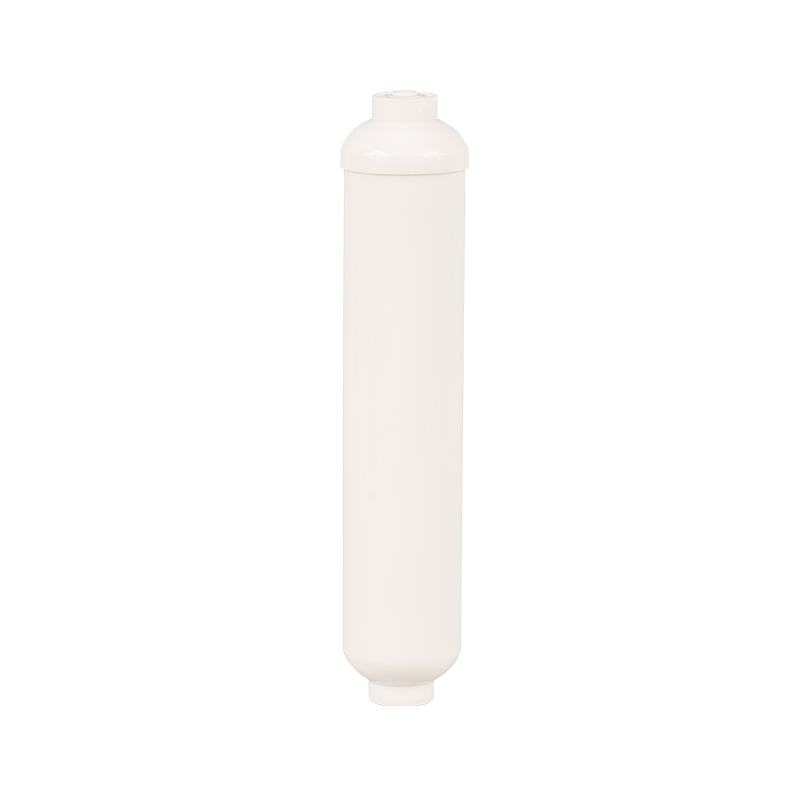 Threaded Post Activated Carbon Filter CartridgeA T33-style threaded carbon filter intended for post-carbon polishing in RO systems. Its direct replacement design simplifies maintenance and helps sustain water quality at the final stage.View Product →
For post-carbon polishing in a reverse osmosis system, a threaded T33 cartridge is a direct and convenient replacement option. Regular maintenance of the carbon stage keeps the entire system performing as designed. For a broader picture of cartridge types and service intervals, see our complete guide to activated carbon filtration.
Frequently Asked Questions
How long does an activated carbon filter last?
The lifespan depends on water quality, daily consumption, and the amount of carbon in the cartridge. In typical household applications, a carbon cartridge is often replaced every three to six months, while large GAC housings may last a year or more.
Does activated carbon remove bacteria and viruses?
No. Activated carbon is not a disinfection step. A saturated carbon bed can even retain organic matter and allow bacteria to multiply, so replacing cartridges on schedule is essential.
Is carbon block better than granular activated carbon?
It depends on the goal. Carbon block offers finer pores and combines mechanical filtration with adsorption, which is useful before an RO membrane. GAC provides higher flow and is easier to use in large refillable housings. Many high-performing systems use both.
Activated carbon works through adsorption on an enormous internal surface area. It is highly effective for chlorine, taste and odor compounds, and many organic chemicals, but it does not remove minerals, salts, or microorganisms. That is why carbon is usually combined with other treatment stages such as sediment prefilters and reverse osmosis membranes. Whether you are building a new system or replacing cartridges in an existing one, understanding how activated carbon works in water treatment helps you choose the right media, place it in the right position, and change it at the right time. If you need help selecting carbon cartridges or other filtration components, feel free to contact our team.

