


 English
 中文简体
中文简体
Picture the moment when the water from a kitchen tap suddenly tastes like chlorine again, nine months after a fresh carbon cartridge was installed. The cartridge looks unchanged, the water still runs clear, and the flow rate feels normal, yet the taste and odor of the municipal supply are unmistakably back. The reason is that activated carbon does not fail like a mechanical filter. It saturates silently, particle by particle, until the carbon bed can no longer hold new contaminants.
Here is the practical answer: replace activated carbon filter cartridges every 6 to 12 months for normal household water use, and sooner when raw water quality is poor or daily consumption is high. The right interval depends on cartridge type, system configuration, and the gallons of water that actually pass through the carbon. This guide explains the baseline schedule, the variables that shorten or lengthen it, and the warning signs that a cartridge has already reached the end of its service life.
Why Activated Carbon Exhausts Even When the Water Looks Clean
Activated carbon removes contaminants through adsorption, not straining. The media is engineered with millions of micropores that trap chlorine, chloramine, volatile organic compounds, and odor-causing molecules on their surfaces. A typical carbon block cartridge contains a huge internal surface area, but every gram of carbon has a finite number of adsorption sites. Once they are occupied, the cartridge reaches breakthrough and contaminants begin to pass through.
Breakthrough rarely announces itself. The water still looks clear because the carbon is no longer removing visible particles, and the cartridge may continue to channel water for weeks. Worse, a saturated carbon bed holds trapped organic material that microorganisms can feed on, which is why an overdue cartridge is not merely ineffective but a potential hygiene risk. For a more detailed explanation of how carbon behaves inside a purifier, see this overview of activated carbon filters in water purifiers.
A Realistic Baseline: 6 to 12 Months for Most Household Systems
For a typical household on municipal water, a carbon cartridge installed in a countertop filter, under-sink system, or reverse osmosis setup will last between six months and one year. The table below gives the practical range for the three carbon cartridge formats used in most water treatment systems.
| Cartridge type | Typical location | Usable life | Main replacement trigger |
|---|---|---|---|
| CTO carbon block | Pre-filter stage before RO membrane | 6 to 12 months | Chlorine breakthrough or pressure loss |
| UDF granular carbon | First or second carbon stage | 6 to 12 months | Weaker chlorine and odor removal |
| T33 post-carbon | Final cartridge after membrane or tank | 8 to 12 months | Flat taste or slight odor returning |
The six-month figure is a safety floor, not a ceiling. Under light use, a 10-inch block cartridge can still remove chlorine at twelve months. Under heavy use with poor source water, the same cartridge may be exhausted at four months. Rated capacity in gallons, published by the manufacturer, is therefore a more precise planning tool than a calendar date alone.
Four Factors That Change the Replacement Window
Instead of memorizing one fixed interval, evaluate how these four variables affect your specific installation.
Incoming Water Quality
Municipal water with a high chlorine residual saturates carbon faster than low-chloride groundwater. Well water containing iron, hydrogen sulfide, or natural organic matter can coat the carbon surface and shorten service life by several months. If your source water carries heavy sediment, a CTO pre-block cartridge may clog rather than chemically exhaust, which usually appears as a noticeable drop in flow rate long before the carbon is saturated.
Daily Water Volume
A two-person household using four gallons of drinking water per day puts a lighter load on the cartridge than a family of five using twelve gallons. The same cartridge that lasts twelve months in the first home may need replacement at six months in the second. When you install a new cartridge, write the date on the housing and estimate daily use from the number of filtration cycles.
Upstream Pre-Filtration
A sediment pre-filter such as a 5-micron PP cotton cartridge removes particles before they reach the carbon media. That one step extends carbon life noticeably because suspended solids no longer occupy adsorption sites or clog carbon pores. The upstream sediment filter has its own replacement schedule, and knowing how often a water filter cartridge should be replaced lets you plan both changes on the same service visit.
Water Temperature
Warmer water accelerates the reaction between chlorine and carbon. In hot climates or during summer months, the effective life of a carbon cartridge can shorten by 20 to 30 percent compared with the same system running on cold water.
Signs That a Carbon Cartridge Has Reached the End of Its Service Life
Because exhausted carbon often looks and flows exactly like fresh carbon, rely on these five signals rather than visual inspection:
- Chlorine smell or taste returning at the faucet
- A visible decrease in flow rate from the filter housing or RO faucet
- No improvement in taste even after the system has been idle for several hours
- Discoloration or a musty odor from the cartridge after removal
- The cartridge has reached the 12-month mark, even if the water still seems acceptable
The final point matters most. A saturated post-carbon cartridge can release absorbed organic material back into the water, where it becomes food for bacteria. Replacing carbon on schedule is therefore a health decision, not just a taste decision.
Choosing the Right Carbon Cartridge for Each Stage
Replacement intervals only make sense when the cartridge format matches the job it does. In a standard multi-stage RO system, the pre-carbon stage faces the heaviest chlorine load and needs a dense media structure. Most installers fit a 10-inch CTO pre-block filter cartridge in the second housing, downstream of a sediment cartridge, to protect the RO membrane from chlorine damage.
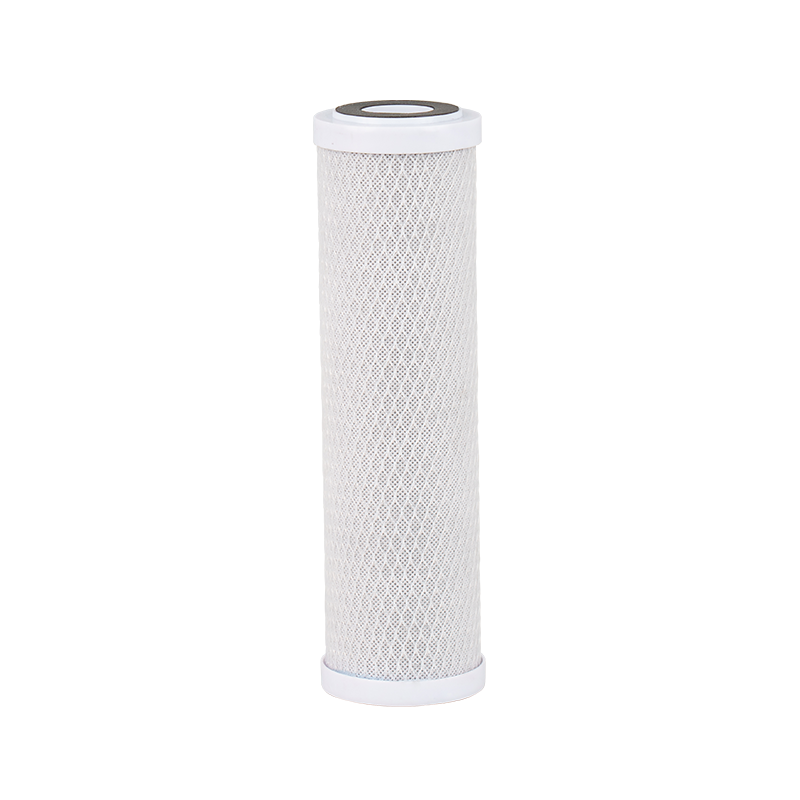 Wholesale 10 Inch CTO Pre-Block Filter Cartridges Factory, Manufacturers - YuyaoYuyao Spring Water Filter Equipment Co., Ltd. is China wholesale 10 Inch CTO Pre-Block Filter Cartridges factory and 10 Inch CTO Pre-Bloc...View Product →
For systems where flow rate matters more than pressure resistance, or where the water has moderate particulate loading, granular media is a more forgiving choice. A 10-inch granular activated carbon filter cartridge uses loose granules that allow heavier flow and tolerate particles without choking the way a tight block can.
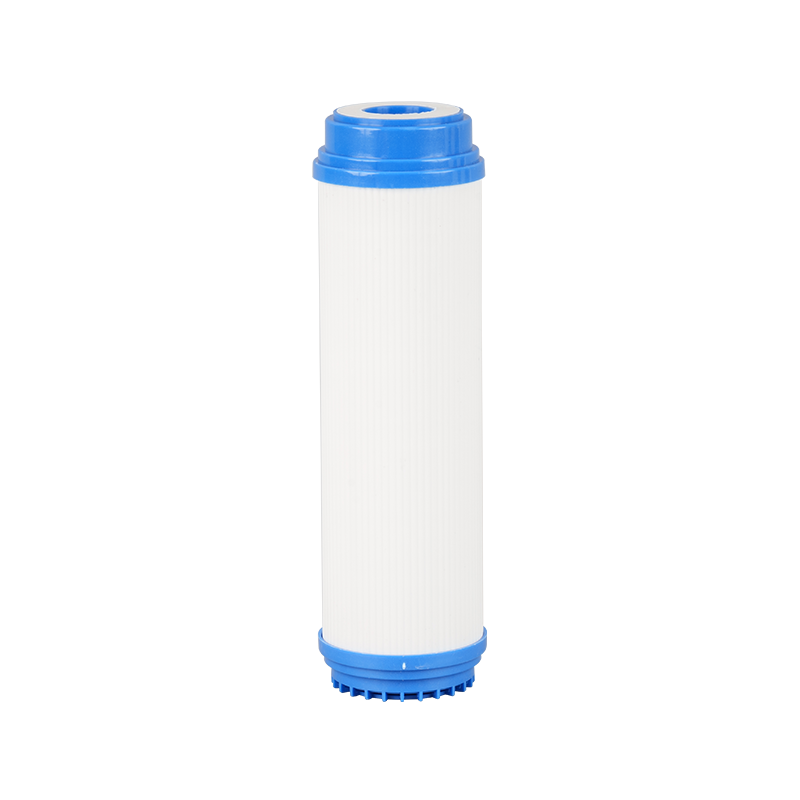 Wholesale 10 Inch Granular Active Carbon Filter Cartridges Factory, ManufacturerYuyao Spring Water Filter Equipment Co., Ltd. is China wholesale 10 Inch Granular Active Carbon Filter Cartridges factory and 10 Inch Gra...View Product →
After the RO membrane, the water has already been filtered, so the final carbon cartridge mainly corrects taste and removes volatile compounds picked up from the storage tank. A quick-insert post-carbon filter cartridge is a practical option in this position because it installs directly into the line between the tank and the faucet, replacing the older threaded T33 format.
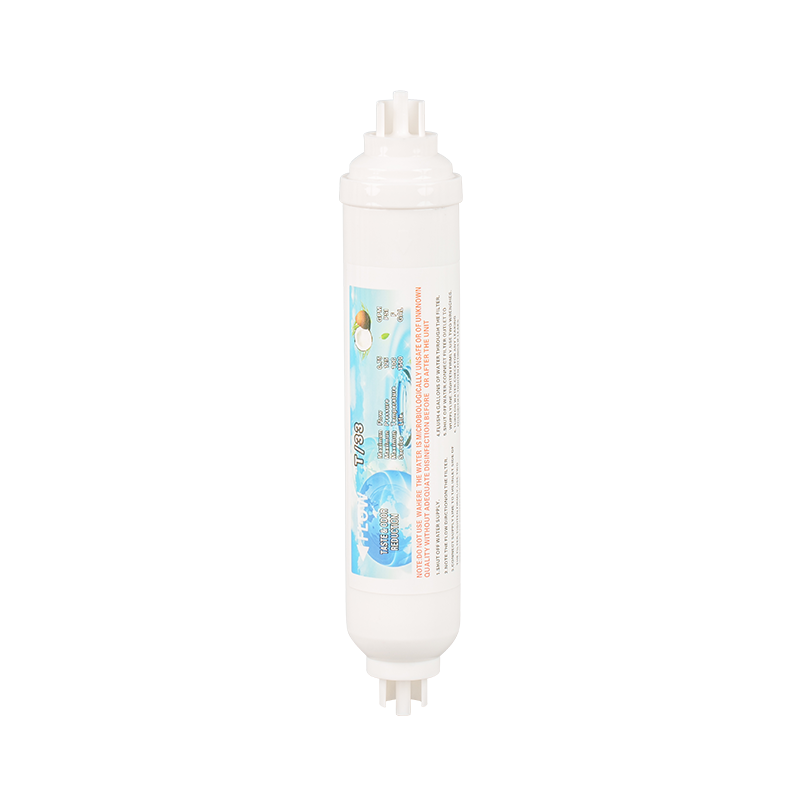 Wholesale Quick Insert Post Carbon Filter Factory, Manufacturers - Yuyao Spring Yuyao Spring Water Filter Equipment Co., Ltd. is China wholesale Quick Insert Post Carbon Filter factory and Quick Insert Post Carbon Fil...View Product →
Building a Replacement Schedule That Fits Your System
The most reliable schedule combines time, volume, and a quick physical check. Start by installing a new cartridge and recording the date. Set a reminder for six months, then examine the cartridge:
- Remove it and compare its weight and color with a fresh cartridge of the same model.
- Check the outer wrap or cap for visible sediment build-up.
- Run the system and note whether the pressure drop has increased since installation.
Apply these two rules to finalize the interval:
- If there is no sediment pre-filter upstream, change the carbon cartridge every 6 months as a precaution.
- If the system is a complete RO setup with sediment and carbon pre-stages, the T33 post-carbon can usually run the full 12 months.
Systems serving more than ten gallons per day should switch from a time-based schedule to a volume-based one, using the manufacturer's rated capacity in gallons or liters. Inline and quick-connect cartridge versions have the same adsorption limits as standard 10-inch formats, so the same 6 to 12 month logic applies no matter which housing or fitting type you use.

