


 English
 中文简体
中文简体
If your tap water contains fluoride—at the typical municipal range of 0.7 to 1.2 mg/L, or naturally at higher levels in some groundwater—and you want to reduce it, the practical conclusion is straightforward: a standard pitcher or countertop carbon filter will not remove significant amounts. The methods that actually work are reverse osmosis, activated alumina adsorption, and distillation. For most households, a point-of-use reverse osmosis system offers the best combination of fluoride rejection, running cost, and convenience.
Fluoride behaves differently in water from the contaminants ordinary filters are designed to catch. That difference is why some products remove chlorine and sediment well but barely touch fluoride. Once you understand the mechanism, you can compare products on the only metric that matters—verified rejection rate—instead of relying on marketing claims.
Why Fluoride Survives Most Filters
Fluoride dissolves in water as ionic species, specifically negatively charged fluoride ions surrounded by water molecules. At that molecular scale, removal requires ion-selective media or a membrane separation process, not mechanical straining. A sediment filter rated at 5 microns or even 1 micron catches rust, sand, and particles, but it cannot stop a dissolved ion. Standard activated carbon adsorbs chlorine and organic chemicals, yet it has almost no capacity for fluoride. Boiling does not help at all: only pure water vapor disappears, so the fluoride concentration in the remaining water actually increases.
This is why the only filters that claim fluoride removal contain specialized media such as activated alumina or bone char, or rely on reverse osmosis. If a product does not explicitly state a fluoride reduction percentage backed by test data, treat its fluoride removal as negligible.
The Three Methods That Actually Work
Three treatment principles have a consistent track record in residential water treatment: reverse osmosis, activated alumina adsorption, and distillation. Each has different operating limits and economics.
Reverse Osmosis
Reverse osmosis is the most widely recommended method for fluoride removal in drinking water. The system forces feed water under pressure through a semipermeable membrane with an effective pore size near 0.0001 microns. Fluoride ions are too large to pass through with the permeate water, so they are concentrated in the reject stream and sent to the drain. A well-maintained reverse osmosis membrane typically rejects 85 to 95 percent of incoming fluoride. In most municipal and well-water settings, that brings fluoride down from around 1.0 mg/L to well below the WHO guideline of 1.5 mg/L with meaningful margin.
RO has an important advantage over adsorption media: fluoride rejection does not depend on a finite adsorption capacity. It continues as long as the membrane remains intact and operating pressure is sufficient. The same process also reduces arsenic, nitrate, lead, and other dissolved contaminants, which makes RO a practical choice if your broader water quality concerns go beyond fluoride. For a deeper look at this mechanism, including the difference between thin-film composite and CTA membranes, read what a reverse osmosis membrane is and how it works. The core consumable is the household RO membrane filter cartridge, and its rated rejection percentage is the first specification to compare when selecting a system.
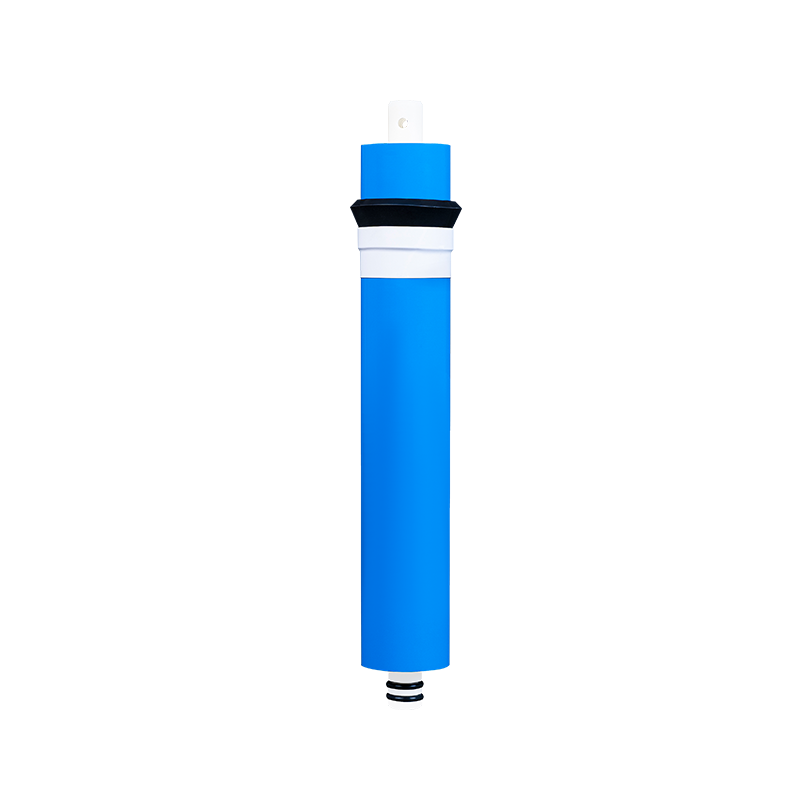 Household RO Membrane Water Filter Cartridge Factory, ManufacturersYuyao Spring Water Filter Equipment Co., Ltd. is China household RO membrane water purifier filter cartridge manufacturers and factory, w...View Product →
Activated Alumina
Activated alumina is a porous aluminum oxide media that adsorbs fluoride ions onto its large surface area. It appears in dedicated fluoride cartridges, under-sink media tanks, and some countertop units. The method works, but three conditions must be respected. First, pH matters: adsorption is strongest below roughly 8.5 and falls off sharply in more alkaline water. Second, capacity is finite: each cartridge or media bed can adsorb only a certain mass of fluoride before breakthrough. Third, media replacement must be scheduled, not postponed until taste or flow changes. For a single-tap application, activated alumina can be a legitimate alternative, but it requires more attention to source water chemistry than RO.
Distillation
Distillation is conceptually simple: water is boiled, the steam is condensed, and every dissolved solid that cannot vaporize—including fluoride—stays in the boiling chamber. Household distillers commonly achieve above 99 percent fluoride removal. The drawbacks are practical rather than technical. Production is slow, energy consumption is high, and the resulting water is completely demineralized. Many users find distilled water flat, and long-term sole use may want a remineralization step. Distillation is reliable for small volumes or emergency use, but it is rarely the most convenient source for a family's daily drinking water.
| Method | Typical fluoride reduction | Key requirement | Main drawback |
|---|---|---|---|
| Reverse osmosis | 85-95% | 40-60 psi feed pressure | Waste water; slower production |
| Activated alumina | Up to about 90% | pH below 8.5 | Finite capacity; media replacement |
| Distillation | Above 99% | Heating element and condenser | High energy use; slow output |
What Makes an RO System Reliable for Fluoride Removal
The membrane is the heart of a reverse osmosis system, but it does not work alone. The cartridge sequence and supporting components determine whether the membrane keeps its rated rejection rate over time.
A standard under-sink RO system runs water through a sediment pre-filter, then a carbon pre-filter, then the membrane, and finally a post-filter. The 10-inch PP cotton sediment filter catches the particles that would otherwise plug the membrane surface. The carbon stage removes chlorine, which degrades thin-film composite membranes. If either stage is missing or exhausted, membrane life shortens, production drops, and fluoride rejection can slip well below the rated value.
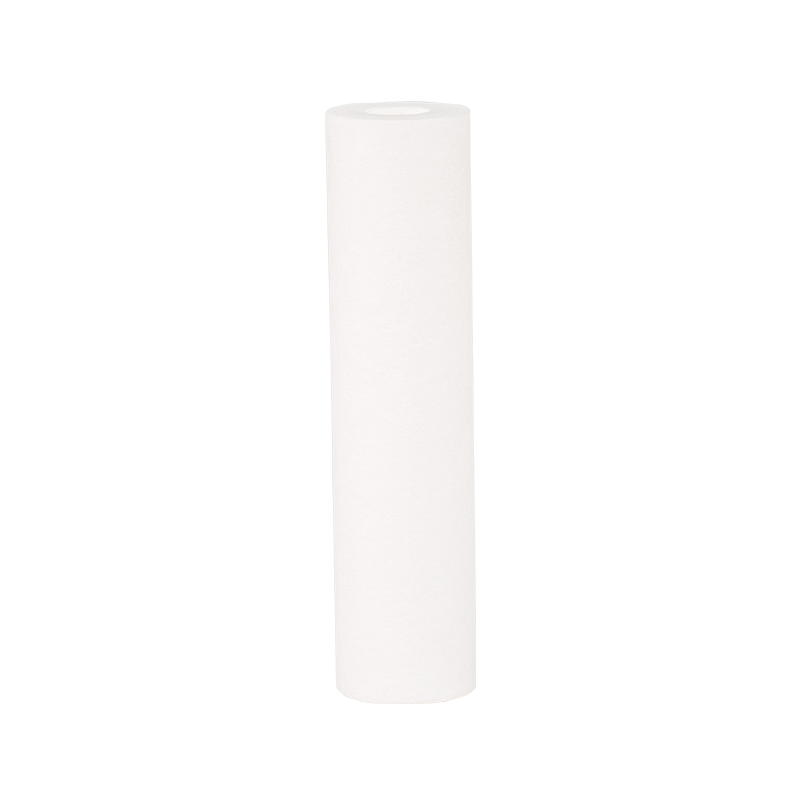 5 Micron Melt Blown PP Cotton Filter Manufacturers, FactoryAs China 5 micron melt blown PP filter manufacturers and 10 inch pp cotton filter factory, Yuyao Spring Water Filter Equipment Co., Ltd. ...View Product →
Supporting components matter more than most first-time buyers expect. An automatic shut-off valve stops the system when the storage tank is full, preventing continuous operation. An auto-flush valve rinses the membrane at intervals, reducing scaling and extending its life—relevant if your water has moderate hardness. A low-pressure switch can protect the system when feed water pressure drops. If your incoming pressure is below 40 psi, plan for a booster pump; without it, the system produces water slowly and membrane rejection may suffer.
Post-Treatment, Taste, and Remineralization
The permeate from a healthy membrane is very low in total dissolved solids. That low mineral content is exactly what allows fluoride removal to work, but it also changes the water's mouthfeel. Many people describe RO water as flat. A final carbon polish, usually a T33 post-filter, takes out any residual taste from the storage tank. If you want calcium and magnesium restored for taste or nutritional contribution, a remineralization cartridge can be placed after the membrane. A remineralizing T33 filter cartridge is the simplest option in a standard under-sink system because it fits the same housing as an ordinary post-filter.
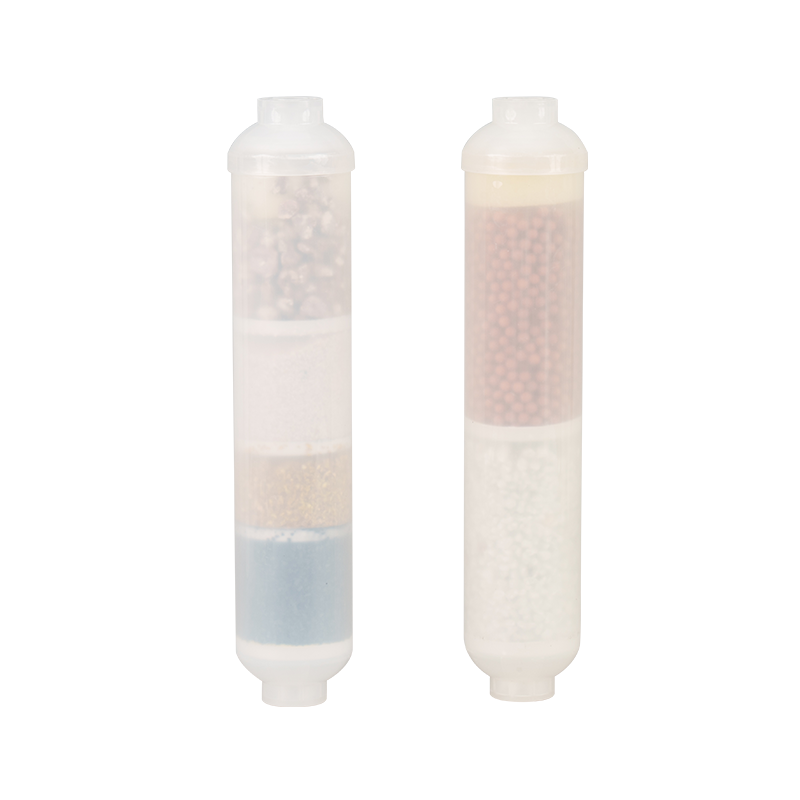 Wholesale Complex Mineral Filter Small T33 Factory, Manufacturers - Yuyao SpringYuyao Spring Water Filter Equipment Co., Ltd. is China wholesale Complex Mineral Filter Small T33 factory and Complex Mineral Filter Smal...View Product →
This final step has no effect on fluoride removal. The membrane has already done the selective work; the post-treatment stage can only add minerals back into water that is already low in fluoride.
Installation and Maintenance: Protecting Performance
Fluoride rejection is only as good as the current condition of the system. A scaled membrane, a clogged pre-filter, or low operating pressure can all reduce rejection. A short maintenance sequence keeps performance predictable:
- Test the source water before purchase. Measure fluoride, pH, and total dissolved solids so the method can be matched to actual conditions.
- Check the available water pressure with a gauge. If it is below 40 psi, budget for a booster pump.
- Install the filter stages in the correct order. Sediment and carbon always go before the membrane, never after it.
- Replace consumables on schedule. Sediment and carbon pre-filters typically go at 6 to 12 months; a household membrane usually lasts 2 to 3 years with good pre-filtration.
- Verify performance periodically. A TDS meter gives an indirect reading, and water test strips can confirm residual fluoride directly.
If you need the general intervals for every stage of an RO system, the guide to how often filter cartridges should be replaced covers the standard replacement schedule in more detail.
The Bottom Line
Filtering fluoride out of water means choosing a mechanism that handles dissolved ions, not just particles. Among the three proven methods, reverse osmosis is the best default for household drinking water: it is effective, verifiable, and convenient in daily use. Activated alumina is a valid alternative when you want a dedicated fluoride cartridge and can respect its pH and capacity limits. Distillation offers the highest removal percentage but carries the highest running cost.
When comparing systems, ask for three numbers: the fluoride rejection rate under test conditions, the replacement interval and cost of consumables, and the pressure range the system needs. Choose standard-size cartridges from a supplier that publishes clear specifications, and maintain the system on schedule. That combination is what separates a fluoride filter that works in a lab demonstration from one that still delivers low-fluoride water after years of daily use.

