


 English
 中文简体
中文简体
You just received a water test showing 15 ppb of lead, or your under-sink RO membrane has stopped producing the rejection rate it delivered in its first year. Both situations lead to the same practical question: how do you remove heavy metals from water? The answer is that no single filter removes every metal, but a well-designed treatment chain comes close. Reverse osmosis membranes are the most dependable barrier for lead, arsenic, cadmium, chromium, and mercury; activated carbon handles part of the load; and industrial systems add precipitation and ion exchange for heavier contamination.
Where Heavy Metals Come From and Why They Matter
Heavy metals enter water through two main routes. Geogenic contamination comes from natural deposits, such as arsenic in groundwater in parts of Southeast Asia, Latin America, and the United States. Anthropogenic sources are just as common: mining runoff, industrial discharge, agricultural fertilizer, and corrosion of aging lead or galvanized pipes. The metals most frequently detected in drinking water are lead, arsenic, mercury, cadmium, chromium, and copper.
Chronic exposure, even at low concentrations, is linked to neurological damage, kidney problems, and developmental disorders. For that reason, the practical goal is not simply to lower metal levels but to keep them below WHO and national drinking water standards. Removal performance is therefore judged by final concentration, not just by removal percentage.
The Main Removal Methods at a Glance
Each method works on a different separation principle, and each fits a different part of the treatment train. The table below compares the most common approaches.
| Method | How It Works | Metals Removed | Typical Application |
|---|---|---|---|
| Reverse osmosis | Semi-permeable membrane rejects dissolved ions under pressure | Lead, arsenic, cadmium, chromium, mercury, copper | Point-of-use drinking water and larger RO plants |
| Activated carbon adsorption | Metals bind to the carbon surface | Lead and mercury partially; limited for arsenic | Pre-filtration and taste polishing |
| Ion exchange | Resin exchanges harmful metal ions for sodium or hydrogen | Lead, cadmium, nickel, strontium | Water softening, industrial streams |
| Distillation | Boiling and condensation leave non-volatile metals behind | Almost all metals | Small batch drinking water production |
| Chemical precipitation | pH adjustment forms insoluble metal hydroxides | Most metals at high concentration | Industrial wastewater |
| Electrocoagulation | Electrical current creates a coagulant that captures metals | Many dissolved metals | Industrial effluent streams |
As the table shows, reverse osmosis and distillation are the broadest options, while carbon, resin, and precipitation methods target specific conditions. That is why real systems rarely rely on one step.
Reverse Osmosis: The Strongest Single Barrier
Reverse osmosis pushes water through a semi-permeable membrane under pressure. Water molecules pass through, while dissolved salts and metal ions are rejected and sent to the drain. A correctly operated household RO system removes approximately 90 to 99 percent of lead, arsenic, chromium, copper, cadmium, and mercury. The exact rejection depends on membrane type, incoming pH, temperature, and recovery rate.
The membrane itself is the component that determines the ceiling of performance. In a typical under-sink unit, the household RO membrane cartridge is what turns tap water into water that meets the WHO guideline values for most heavy metals. It is also the most expensive part to replace, which is why the stages around it exist to protect it.
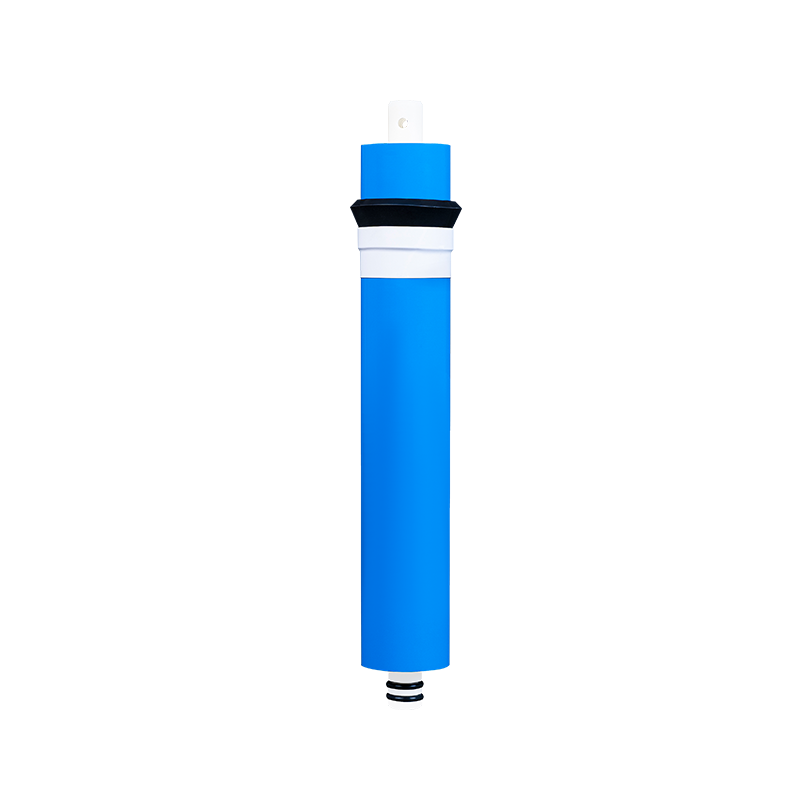 Household RO Membrane Water Filter Cartridge Factory, ManufacturersYuyao Spring Water Filter Equipment Co., Ltd. is China household RO membrane water purifier filter cartridge manufacturers and factory, w...View Product →
Reverse osmosis works best when the feed water is already free of chlorine and sediment. A 5-micron PP sediment cartridge catches particles that would block the membrane surface, and a carbon block removes chlorine that would shorten membrane life. If the feed pressure is low, a booster pump and inlet solenoid valve maintain the required flow. This is not a single-filter solution; it is a system.
Activated Carbon: A Useful Partner, Not a Complete Fix
Activated carbon removes heavy metals by adsorption rather than by sieving. Metal ions attach to the large surface area inside the carbon block, and some impregnated carbons reduce chromium VI to the less toxic chromium III. For lead and mercury, carbon can deliver meaningful reduction, especially as the last stage before the water reaches the tap. For arsenic and cadmium, however, the removal efficiency is far lower, so carbon alone is not a robust treatment solution.
In a multi-stage purifier, the role of carbon is split between the beginning and the end of the train. A 10-inch CTO pre-carbon filter cartridge protects the RO membrane from chlorine and organic fouling, while a post-carbon cartridge improves taste after the membrane. This division of labor is one reason why replacement assemblies are sold as sets rather than as single cartridges.
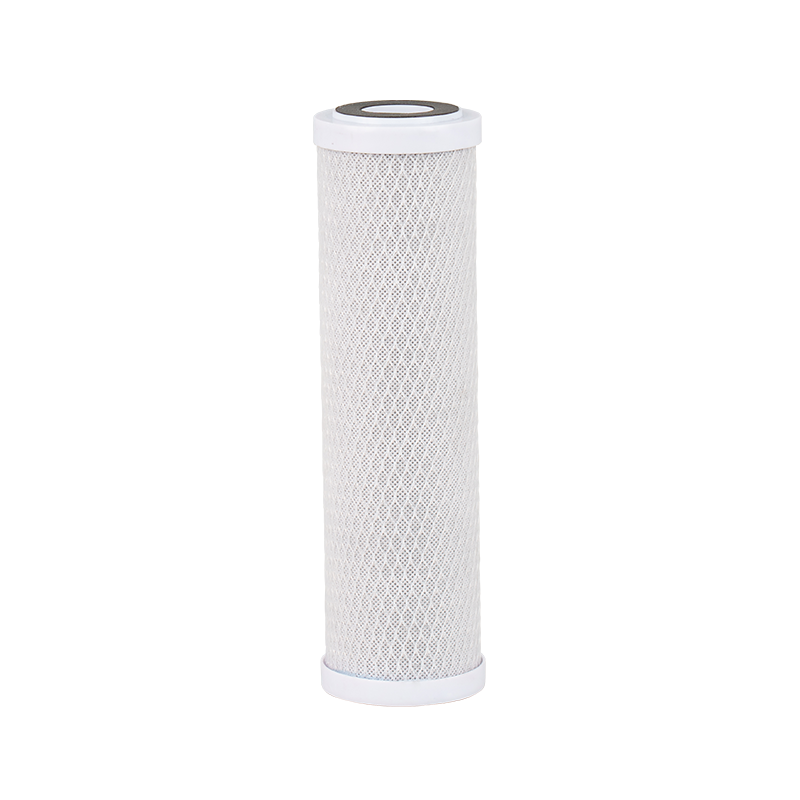 Wholesale 10 Inch CTO Pre-Block Filter Cartridges Factory, Manufacturers - YuyaoYuyao Spring Water Filter Equipment Co., Ltd. is China wholesale 10 Inch CTO Pre-Block Filter Cartridges factory and 10 Inch CTO Pre-Bloc...View Product →
Building a Household System Stage by Stage
A practical household treatment train looks like this: sediment filtration first, then pre-carbon, then reverse osmosis, then post-carbon. Each stage does a specific job. The sediment filter removes rust, sand, and particles that would scratch the membrane. The pre-carbon filter removes chlorine and partially reduces the organic load. The membrane removes dissolved metals. The post-carbon polishes the water for taste.
This chain only remains effective if every stage is maintained on schedule. A clogged sediment filter forces the system to work with less flow, and a saturated carbon block can release contaminants it had previously removed. The filter cartridge replacement interval depends on incoming water quality and household consumption, typically 6 to 12 months for prefilters and 2 to 3 years for RO membranes. Pressure gauges and high/low pressure switches also give early warning when a cartridge is exhausted, which is why accessories belong in the same specification as the membrane itself.
Industrial and Commercial Treatment Trains
Industrial water treatment follows the same chemistry at a much larger flow rate. Instead of one membrane under the sink, an industrial train uses clarification, media filtration, resin contactors, and membrane skids arranged in series. Chemical precipitation and electrocoagulation are often used at the front end when metal concentrations are high; ion exchange polishes the water when the target metal needs to be driven down to parts-per-billion levels.
For facilities that need continuous supply, such as textile plants, electroplating lines, or beverage manufacturers, membrane separation is the common backbone. The 4040 industrial RO membrane is a standard element size for these systems, fitting compact vessels with manageable replacement cost.
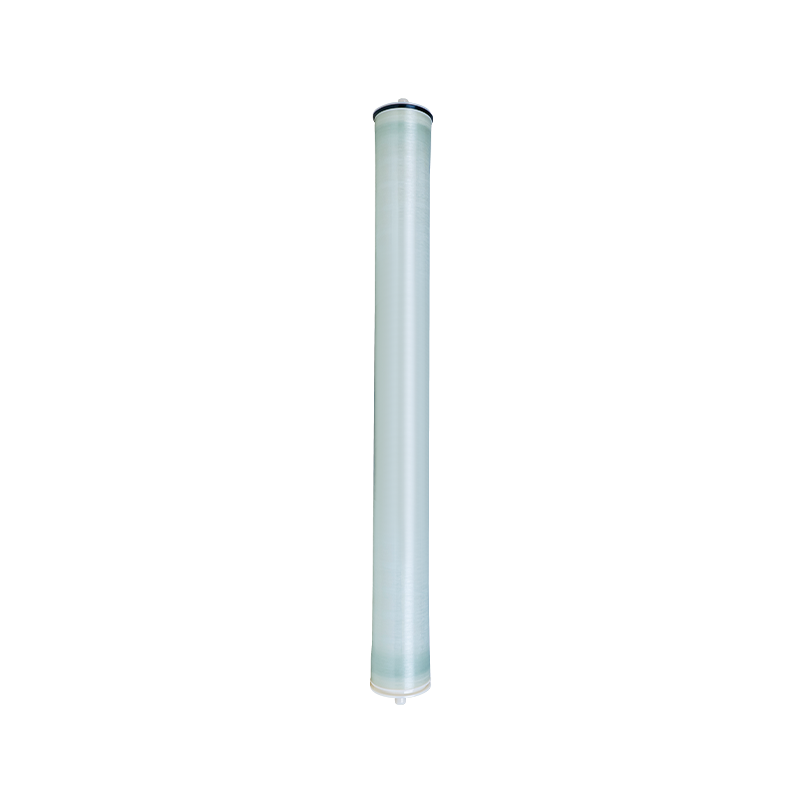 Wholesale 4040 Water RO Industrial Membrane Factory, Manufacturers - Yuyao SprinYuyao Spring Water Filter Equipment Co., Ltd. is China wholesale 4040 Water RO Industrial Membrane factory and 4040 Water RO Industrial M...View Product →
How to Choose the Right Treatment for Your Situation
Selection starts with a water test, not with a filter catalog. Identify which metals are present, their concentration, and the pH of the water. If the target is lead from plumbing, point-of-use RO is the simplest answer. If the problem is arsenic in groundwater, a dedicated adsorption medium may be required upstream of the RO machine. If the goal is a city-supplied industrial line handling dozens of metals, an integrated system is the only realistic path.
Matching system components matters as much as choosing the technology. A membrane rated at 99 percent rejection will not reach that number if the pre-filter has collapsed, if the pressure is below the operating range, or if the solenoid valve fails and lets the system run dry. For distributors, integrators, and OEMs, contacting the manufacturer directly with the feed-water analysis and target flow rate is the fastest way to confirm component compatibility.
The shortest honest answer is that reverse osmosis, supported by sediment and carbon pre-treatment, is the most reliable method for removing heavy metals from drinking water. Activated carbon adsorbs part of the load, and industrial systems add precipitation or ion exchange for high concentrations. Test the water, replace cartridges on schedule, and the final concentration, not the label on the box, is what proves the solution works.

