


 English
 中文简体

Why Chlorine Is Added to Water and Why You May Want It Gone
Most municipalities add chlorine as a disinfectant to keep drinking water free from harmful bacteria. It does its job well, but the leftover chlorine reaching your tap can create an unpleasant chemical taste and smell. It can also irritate skin, dry out hair, and shorten the life of rubber seals and membranes in home water equipment. Knowing how to filter chlorine out of water is more than a matter of taste—it is a practical way to protect your family and your appliances.
As a manufacturer of water filtration components since 2011, we have seen how a simple carbon cartridge or a properly designed reverse osmosis system can change the way people experience tap water. In this guide, we walk through the most reliable methods, how they work, and what you should consider before choosing a solution.
Chlorine vs. Chloramine: First Know What You Are Dealing With
Chlorine is a simple compound that evaporates fairly quickly when exposed to air. Many water utilities now also use chloramine, a more stable combination of chlorine and ammonia. The distinction matters because chloramine is harder to remove. A plain carbon block may need a longer contact time to break down chloramine, while chlorine is adsorbed more easily.
Before selecting a filter, check your local water quality report or run a quick test. This tells you whether you are removing chlorine, chloramine, or both. If you are on a private well, chlorine may not be present at all, but sediment and other contaminants could be, which changes your filtration strategy entirely.
Methods for Filtering Chlorine at a Glance
Different methods do different things. The table below summarizes the most common approaches so you can quickly compare their strengths and limitations.
| Method | Effectiveness | Best for |
|---|---|---|
| Activated carbon (granular or block) | High for chlorine; medium to high for chloramine with adequate contact time | Drinking water systems and whole-house filters |
| Reverse osmosis | High, especially when combined with carbon pre-filtration | Point-of-use drinking water systems |
| Sediment filtration (PP cotton) | None for chlorine; supports upstream carbon and RO stages | Pre-filtration to protect other components |
| Distillation | High | Small quantities and laboratory use |
| UV treatment | Low or none for chlorine | Microbiological disinfection, not chlorine removal |
Activated Carbon Filtration: The Workhorse
Activated carbon removes chlorine through adsorption. The enormous internal surface area of the carbon traps chlorine and organic compounds, leaving water with a cleaner taste. In a typical cartridge, both granular and pressed carbon block versions are available. For removal efficiency, carbon blocks often outperform loose granules because they provide more contact and physical filtration.
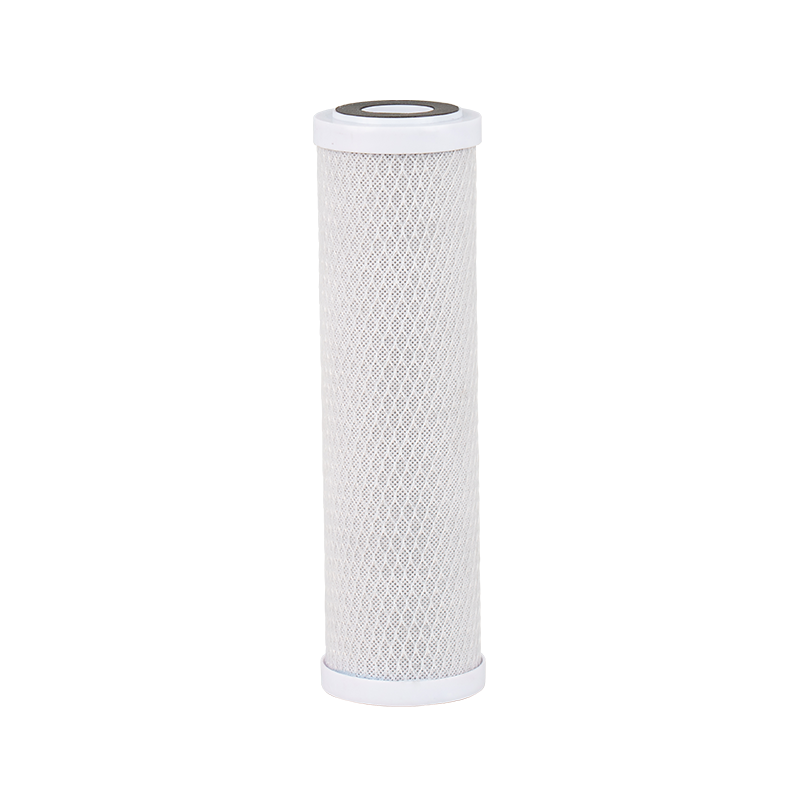 10-Inch CTO Pre-Block Cartridge for Multi-Stage SystemsThis pre-carbon block cartridge reduces chlorine and organic compounds with low pressure drop, making it ideal before an RO membrane.View Product →
Our 10-inch CTO pre-block cartridges are a common choice in multi-stage systems, offering low pressure drop and consistent chlorine reduction. If you are new to carbon filtration, our detailed guide on activated carbon filtration explains the chemistry in plain language. When selecting a carbon cartridge, look for its rated chlorine reduction, flow rate, and the type of water being treated. A dedicated carbon stage before a reverse osmosis membrane is especially important because chlorine can damage the membrane over time.
Reverse Osmosis for Deeper Reduction
Reverse osmosis (RO) pushes water through a semipermeable membrane that rejects dissolved salts, metals, and many organic compounds. While RO membranes themselves are not the first choice for removing chlorine, they provide a strong barrier against a wide range of contaminants once the chlorine has been neutralized by a carbon pre-filter. In practice, a well-designed RO system uses a sediment filter, then a carbon block, and finally the RO membrane. This combination gives water that is not only free of chlorine but also much lower in total dissolved solids.
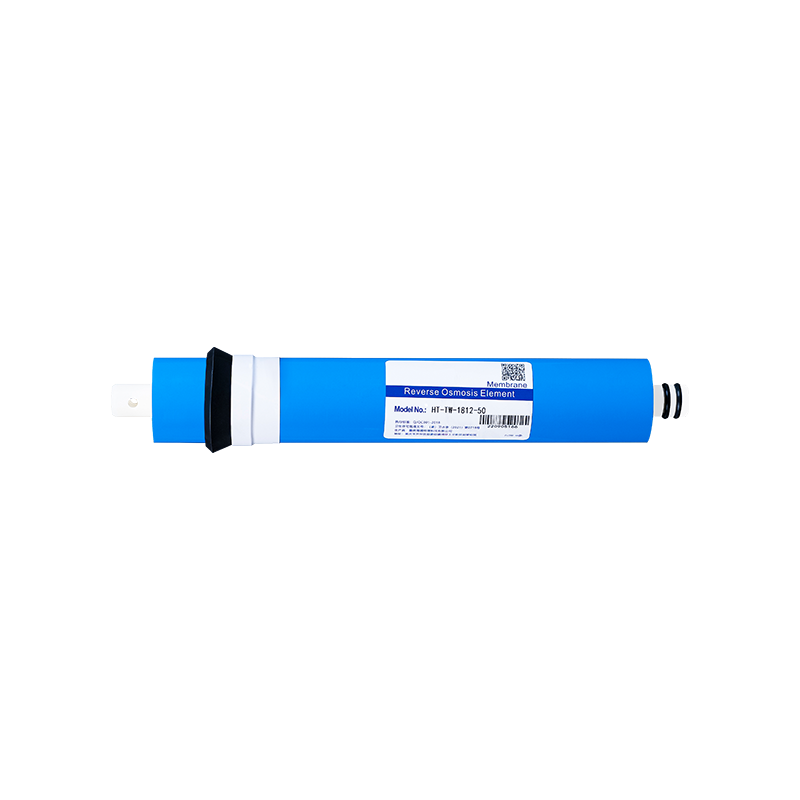 Household RO Membrane Elements with Various Flow RatesAvailable in capacities from 50 to 600 GPD, these membranes reject up to 98% of salts for reliable home water purification.View Product →
Whether you are manufacturing a household water purifier or building a point-of-use system, choosing a reliable RO membrane is critical. Our household membranes are produced to strict tolerances and are widely used in both domestic and export markets. For OEM integrators, pairing the right membrane with the correct pre-filters and flow restrictors makes the difference between a system that works consistently and one that needs frequent service.
The Role of Sediment Pre-filters
Although a PP cotton sediment filter does not remove chlorine, it plays a vital supporting role. By capturing rust, sand, and other particles, it keeps the downstream carbon cartridge and RO membrane from clogging or abrading. This extends the life and efficiency of the entire filtration chain. In our product line, 10-inch PP cartridges are some of the most requested items for both residential and commercial systems.
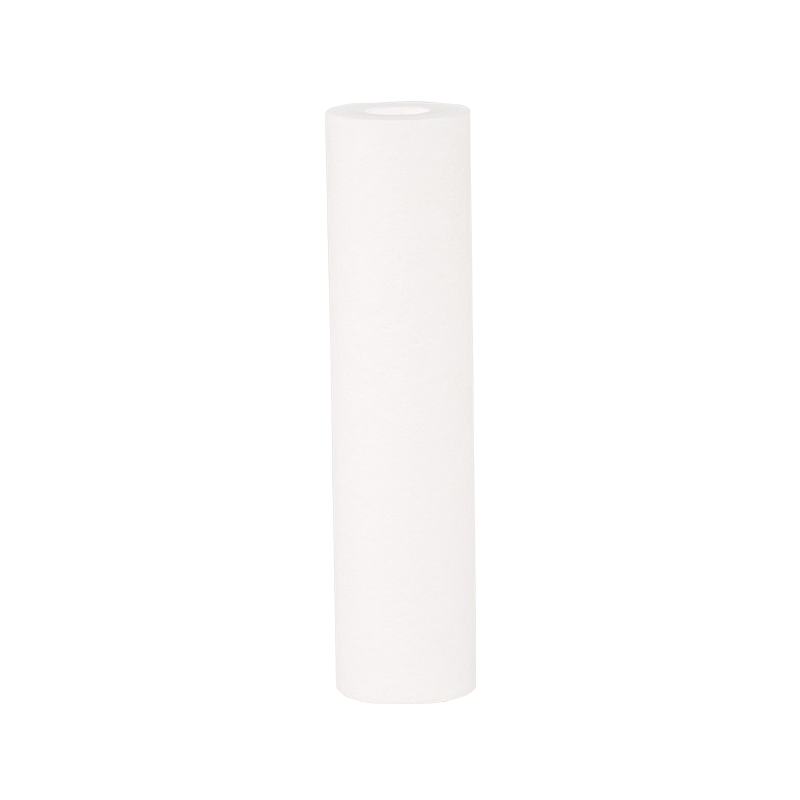 10-Inch PP Cotton Sediment Cartridge for Pre-FiltrationThis sediment filter traps rust and particles to protect downstream carbon and RO stages, with a recommended 3-6 month service life.View Product →
Micron rating matters here: a 5-micron filter catches finer particles than a 10-micron unit, but it also tends to clog faster. For a typical municipal supply, a 5 or 10 micron pre-filter works well. For a well or untreated source, start with a larger 20 or 30 micron sediment filter before moving to a finer one.
Other Ways to Remove Chlorine
Boiling water will accelerate chlorine evaporation, but it takes time and energy, and it does nothing for chloramine. Distillation removes chlorine effectively but is slow and not practical for daily household use. Ultraviolet light is excellent for killing microbes, yet it does not oxidize or remove chlorine. Letting water sit in an open container can reduce chlorine slowly, but chloramine remains stable far longer.
For continuous, reliable supply, a filter-based approach is far more practical. Under-sink filters, countertop units, and whole-house systems all depend on the same fundamental principle: passing water through a material that captures or breaks down the chlorine molecule. That is why carbon and RO remain the standard answers for keeping drinking water free of chlorine.
How to Choose the Right Setup
The right solution depends on your water source, typical flow rate, and intended use. Consider these scenarios:
- If you only want a drinking water tap, a compact under-sink RO system with a carbon pre-filter is efficient and easy to maintain.
- For whole-house chlorine removal, larger carbon housings or backwashing carbon systems give you filtered water at every faucet.
- For a small business or commercial kitchen, a point-of-use carbon block with a higher flow rate may be enough to improve taste and protect equipment.
If you are a manufacturer or integrator, you may need to combine filter cartridges, solenoid valves, and pumps to design a complete purification system. Having worked with these components for over a decade, we can offer practical advice on material selection, pressure ratings, and replacement cycles. The right design minimizes pressure drops, keeps installation simple, and makes future cartridge changes straightforward.
Maintenance and Filter Replacement
No filter removes chlorine forever. Over time, the carbon surface becomes saturated and the RO membrane may foul. A general guide is to replace sediment cartridges every 3–6 months, carbon cartridges every 6–12 months, and RO membranes every 2–3 years, depending on water quality and usage.
Watch for signs that a cartridge has reached the end of its useful life: a gradual drop in flow rate, a return of the chlorine taste or smell, or higher pressure across the filter housing. If you are servicing a system, always follow the manufacturer’s instructions and use compatible parts. Good maintenance saves money in the long run and ensures chlorine stays out of every glass of water.
Final Thoughts
Filtering chlorine out of water is not complicated once you understand the chemistry and the right components. Activated carbon is the classic method, RO adds a stronger barrier, and sediment filtration protects both. For OEM buyers, we supply the cartridges, membranes, valves, and pumps that make these systems work. If you would like to discuss your project, feel free to reach out through our contact page. We have spent years helping partners in the Americas, Europe, Africa, and Southeast Asia build dependable water treatment products, and we are happy to share that experience.

