


 English
 中文简体

Lead in drinking water is a concern that no homeowner should ignore. Over the years, we have talked with families, installers, and water treatment professionals who all ask the same question: how do you filter lead out of water? The answer is not always straightforward, because the right solution depends on your water chemistry, your plumbing, and the type of filter you choose. In this guide, we break down what works, what does not, and how to make sure your water is as clean as possible.
What Is Lead and Why Is It Harmful?
Lead is a heavy metal that can enter drinking water through corroded pipes, lead solder, or brass fittings. Even at low levels, long-term exposure may cause developmental issues in children and kidney or blood pressure problems in adults. Because lead has no taste, color, or odor, the only way to know if it is present is to test your water.
How Lead Gets Into Your Drinking Water
Most lead contamination does not originate from the source water. It usually comes from the distribution system inside your home. If your house was built before 1986, there is a higher chance that lead pipes or lead solder were used. Even newer homes can have brass fixtures that release small amounts of lead, especially when water sits in the pipes for several hours. This is why the first draw of the morning often has the highest lead concentration.
Water that is slightly acidic or low in minerals tends to be more corrosive to pipes and fittings, which increases the amount of lead that can leach into the water. This is why homes with older lead service lines or brass fixtures may see higher lead readings after the water has been stagnant. A simple first-draw test can tell you whether your plumbing is a source of lead.
Filtration Technologies That Remove Lead
Not all water filters are created equal. A basic sediment filter will not remove lead, while other media are specifically designed to reduce it. The table below gives a quick comparison of common filtration types.
| Technology | Removes Lead? | Best For |
|---|---|---|
| Sediment filter (PP) | No | Prefiltration to protect other stages |
| Activated carbon block | Yes (with certification) | Removing lead, chlorine, taste, and odor |
| Reverse osmosis (RO) | Yes | Comprehensive reduction of lead and many other contaminants |
| Ion exchange resin | Yes | Softening and heavy metal reduction in certain conditions |
Sediment Prefilters
If your water has high sediment or turbidity, a melt-blown PP filter placed upstream will protect the more expensive carbon and RO stages and extend their service life. Sediment prefilters do not remove lead, but they prevent particles from clogging the active media, ensuring the lead-reduction filter performs at its rated capacity for the full replacement interval.
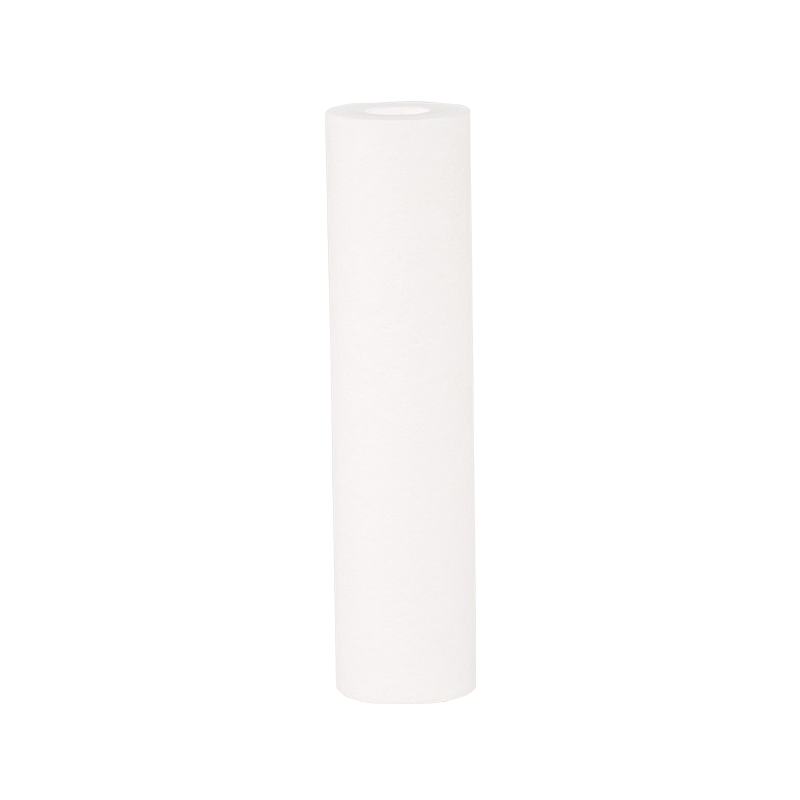 Melt-Blown PP Sediment Cartridge for Pre-FiltrationPlaced upstream, this cartridge removes sediment and particles, preventing clogging and ensuring downstream lead-removal filters work at rated capacity for full service life.View Product →
Activated Carbon Cartridges
Activated carbon blocks, especially those made from high-quality coconut shell or coal-based media, use adsorption to trap lead ions as water passes through. The key is to select a block with a tight structure and an NSF/ANSI 53 certification for lead reduction. Our 10-inch CTO pre-block cartridges are widely used in point-of-use and whole-house systems because of their dense carbon structure and consistent performance.
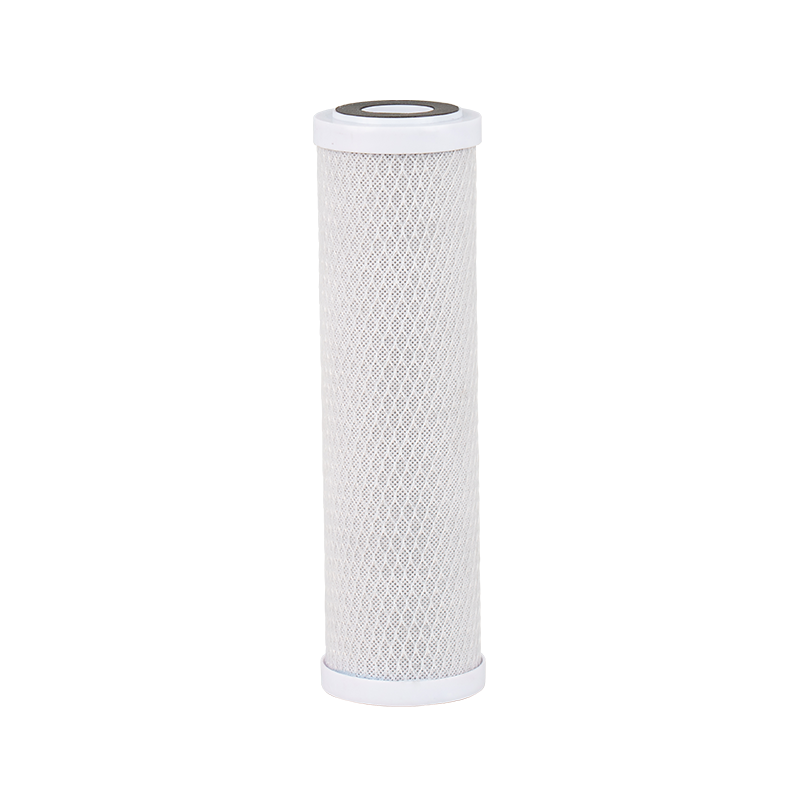 10-Inch CTO Carbon Block for Lead AdsorptionThis dense carbon block removes chlorine and organic compounds while its tight structure helps adsorb lead ions, serving as an effective prefilter before RO membranes.View Product →
Reverse Osmosis Membranes
For a more thorough treatment, reverse osmosis uses a semi-permeable membrane to reject lead and other heavy metals. A typical RO stage includes a sediment prefilter, carbon block, RO membrane, and post-carbon filter. The RO membrane itself is the barrier that physically separates dissolved lead from the water. Household RO membranes in the 1812 or 3013 size range are common choices for under-sink systems.
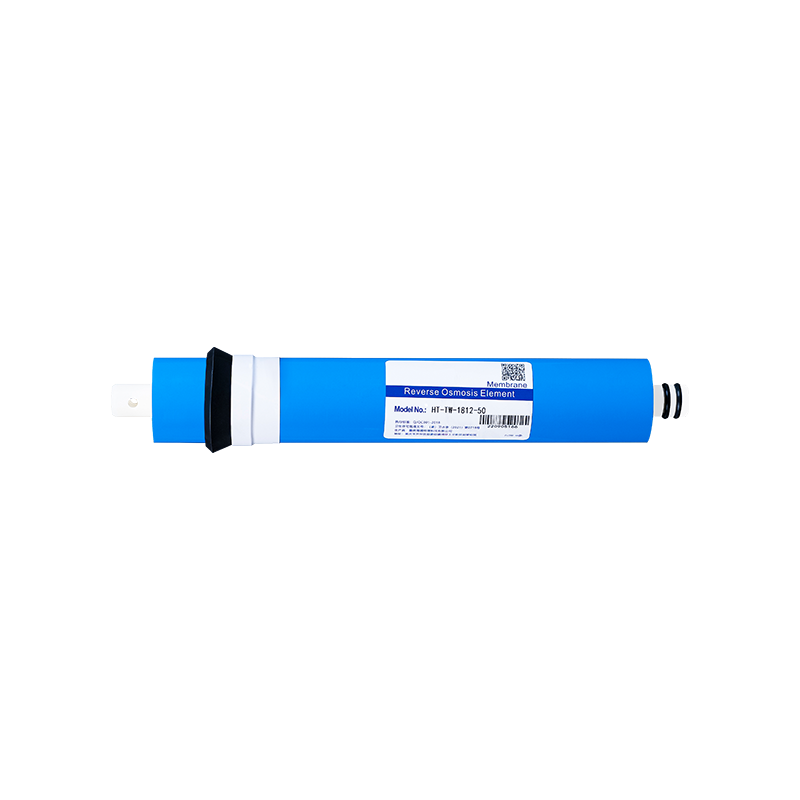 Household RO Membrane Element for Lead RejectionReverse osmosis membrane physically separates dissolved lead and other metals; models offer 50–600 GPD flow and up to 98% salt rejection for under-sink systems.View Product →
How to Choose a Certified Lead-Removal Filter
Look for filters that have been tested and certified by an independent third party against NSF/ANSI Standard 53 for lead reduction or NSF/ANSI Standard 58 for reverse osmosis systems. Certification means the product has been verified to reduce lead below the EPA action level under a defined flow rate and capacity. Always check the label or product data sheet for the claimed reduction percentage and the maximum water temperature.
Another important detail is capacity. A filter that removes lead only has a limited lifetime. Once it reaches its rated gallons, it must be replaced to maintain performance. Forgetting to change cartridges is one of the most common reasons people think a filter is not working. That is why routine maintenance matters just as much as the filter itself. Our guide to water filter replacement schedules covers the signs that a cartridge is exhausted and how often to swap it out.
Practical Tips for Reducing Lead Exposure Today
While you are selecting the right filter, there are simple habits that reduce your family's exposure to lead right away. Use only cold water for drinking and cooking, because hot water dissolves lead more quickly. Flush the tap for 30 seconds to two minutes if water has been sitting in the pipes for several hours. This brings fresh water from the main supply and lowers lead concentration. Also, remove and clean faucet aerators regularly, as small lead particles can become trapped in the screen.
Another often overlooked factor is the temperature of the water. Always keep the filter inlet connected to the cold-water line, and never run hot water through a filter that is not rated for hot temperatures. High temperature can degrade the filter media and release previously captured contaminants.
When a Whole-House or Point-of-Use Filter Makes Sense
If your test results show lead levels above the EPA action level, or if you rely on well water with unpredictable quality, a whole-house system with a large carbon block or a point-of-use RO system may be necessary. A whole-house filter treats every tap, which is valuable for bathing and washing, but it requires higher flow capacity and larger cartridges. Under-sink RO systems are often more practical for families who mainly want clean drinking and cooking water, because they can be installed with minimal disruption and the replacement filter cartridges are inexpensive.
The Bottom Line
Filtering lead out of water requires a filter that is certified for lead reduction, correct installation, and timely maintenance. A sediment prefilter protects the system, activated carbon captures lead through adsorption, and reverse osmosis provides the strongest physical barrier. If you are unsure about your water quality, begin with a reliable test. Then choose a system that matches your results, budget, and household size.
Lead is a stubborn contaminant, but with the right combination of prefiltration, adsorption, and membrane separation, it can be reduced to levels that are safe for daily consumption. The goal is not to buy the most expensive system, but to use the right media and change it on time.
With more than a decade of experience manufacturing water filtration components, we have seen how the right filter can transform water quality. Whether you are building a new system or replacing cartridges in an existing one, choosing reliable parts is the first step. If you have questions about which filter media fits your application, contact our team for advice.

