


 English
 中文简体

If you are shopping for a water purifier, or simply maintaining a reverse osmosis system that is already installed, the same question always comes up: how does an RO water filter work? It is a fair question, because an RO system looks like a small maze of cartridges, tubes and fittings. Once you understand the logic behind each stage, though, the whole setup becomes easy to read and much easier to service.
We have been making filter cartridges, RO membranes, solenoid valves and micro pumps for more than a decade, so we have seen these systems from the inside out. In this guide, we walk through the working principle of reverse osmosis and what actually happens at each stage of a typical household RO water filter.
What Is Reverse Osmosis?
Osmosis is a natural process in which water moves through a semipermeable membrane from a low-solute area toward a high-solute area, balancing concentrations on both sides. Reverse osmosis does the opposite. By applying pressure to the more concentrated side, we force water molecules through the membrane in the reverse direction, leaving dissolved solids behind.
The heart of the technology is the RO membrane itself, a thin film composite material wound into a spiral configuration. Its pores are small enough to let water molecules pass, while dissolved salts, heavy metals and most organic molecules simply cannot get through. That is why RO is fundamentally different from a common filter: it separates at the molecular level, not by straining visible particles.
The Four Main Stages of an RO Water Filter
A complete RO system is more than a membrane. To protect the membrane and deliver good-tasting water, the system relies on a sequence of stages. Although configurations vary from brand to brand, most household units follow the same pattern.
Stage 1: Sediment Pre-Filter
The first stage removes larger particles such as sand, rust, silt and other suspended solids. This protects everything downstream and prevents the membrane from being clogged or scratched. Most sediment cartridges are made from wound polypropylene and are available in 10-inch, inline and threaded integrated forms.
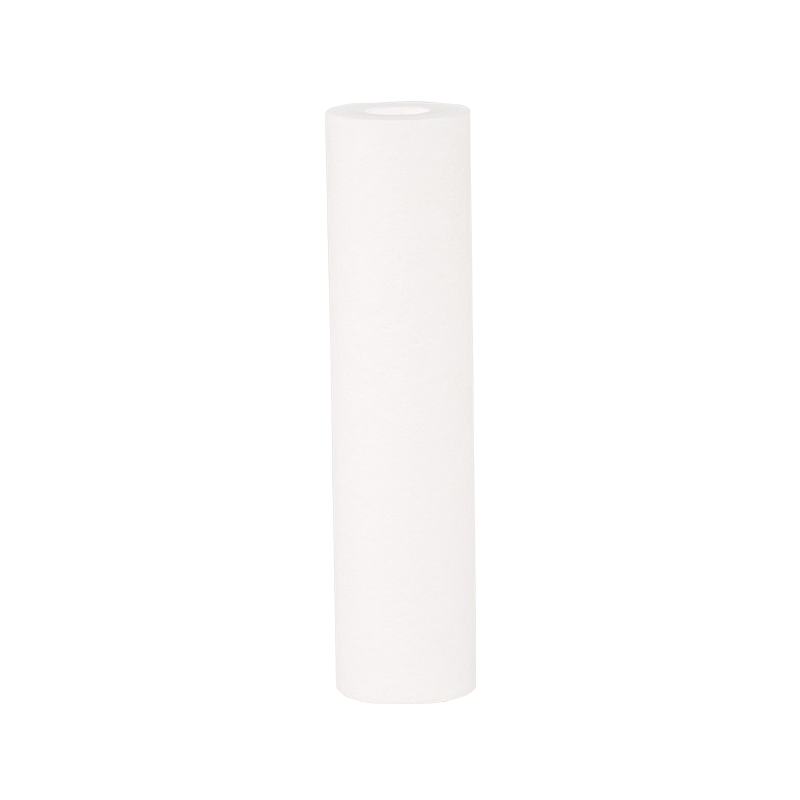 10 Inch PP Cotton Sediment Filter CartridgeAs the first-stage filtration, this polypropylene cartridge removes sand, rust, and silt, safeguarding downstream components and ensuring system longevity.View Product →
Stage 2: Carbon Pre-Filter
The second stage uses activated carbon to reduce chlorine and chloramine, which can chemically degrade a thin-film composite membrane over time. The carbon block also adsorbs organic compounds, unpleasant tastes and odors. A CTO carbon cartridge is a common choice for this position because it combines mechanical retention with strong adsorptive capacity.
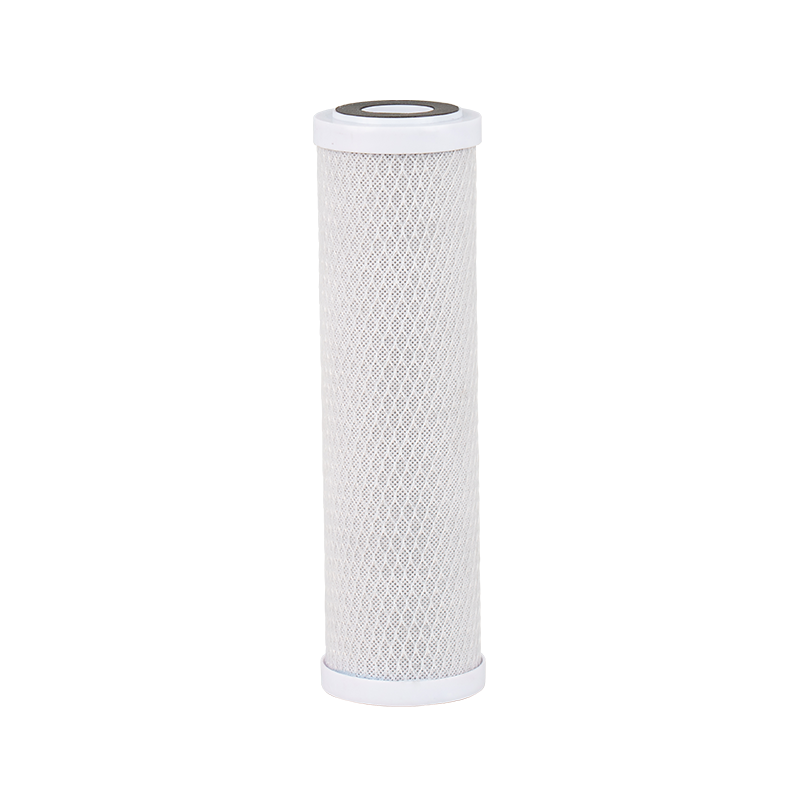 10 Inch CTO Pre-Block Carbon CartridgeThis activated carbon block reduces chlorine, chloramine, and organics, protecting the RO membrane and improving water taste and odor before separation.View Product →
Stage 3: The RO Membrane
This is where the real separation happens. Feed water is pushed against the surface of the membrane under line pressure. Purified water permeates through to the product side, while the concentrated stream, often called brine or reject water, carries the rejected contaminants to the drain. A flow restrictor on the drain line maintains the backpressure required for efficient separation.
Household RO membranes are commonly 1812 elements rated at 50, 75 or 100 gallons per day. If you want a closer look at the separation layer itself, our article on how RO membrane cartridges ensure pure drinking water explains the mechanism in more detail.
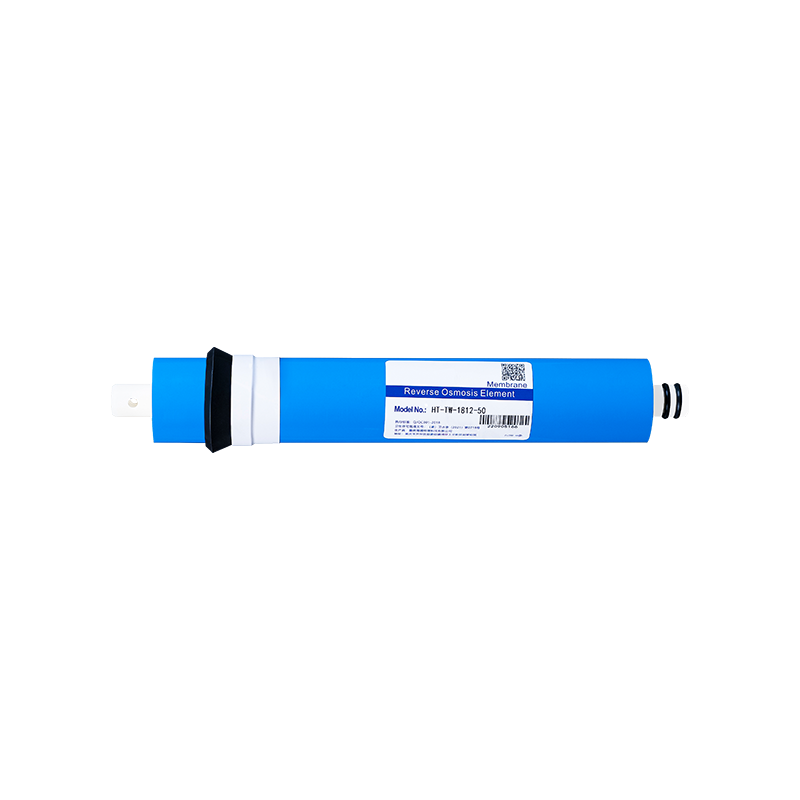 Household Reverse Osmosis Membrane ElementAvailable in multiple GPD ratings, this RO membrane separates dissolved contaminants under pressure, playing the core purification role in household systems.View Product →
Stage 4: Post Carbon Filter
After being stored in the tank, water can pick up a flat or slightly stale taste. The final stage is a post carbon filter, often a small T33 inline cartridge, which polishes the water and gives it a clean and crisp finish. Some systems add a mineralization cartridge here to restore beneficial minerals and improve the mouthfeel of the purified water.
Supporting Components in an RO System
Water does not move through the system by itself. A typical RO water filter relies on a number of components to control flow, pressure and direction. When you open up a unit, these are the parts you will find.
| Component | Function in the Filtration Cycle |
|---|---|
| Feed water adapter | Connects the system to the cold-water supply line |
| Inlet solenoid valve | Opens and closes the feed line during operation and standby |
| Flow restrictor | Maintains pressure across the membrane and controls the reject water ratio |
| Automatic shut-off valve | Stops water production when the storage tank is full |
| Check valve | Prevents product water from flowing back and damaging the membrane |
| Flush solenoid valve | Periodically flushes the membrane surface to reduce fouling |
| Storage tank | Holds purified water under pressure for convenient use |
| Faucet | Delivers the purified water at the sink |
In tankless systems or units with a permeate pump, a small DC pump is added to feed water through the membrane at a consistent pressure. In many modern designs, the inlet and flush solenoid valves are combined into a single valve body to save space and simplify assembly.
What Does an RO Water Filter Remove?
RO is one of the few household water treatment technologies that reduces total dissolved solids, not just suspended particles. The actual rejection rate depends on the quality of the membrane, feed pressure, water temperature and system design. Under normal working conditions, a household RO membrane removes the following contaminants.
| Contaminant Category | Examples | Typical Rejection Rate |
|---|---|---|
| Dissolved salts | Sodium, chloride, sulfates | 85-98% |
| Heavy metals | Lead, arsenic, copper | 90-98% |
| Nitrate and fluoride | Nitrate, fluoride ions | 85-95% |
| Bacteria and cysts | E. coli, giardia, cryptosporidium | 99%+ with intact membrane |
| Organic chemicals | Pesticides, VOCs | Highly reduced with carbon pre- and post-filters |
The sediment and carbon stages are important partners in this process. They do not just clean the water; they protect the membrane so it can keep its rejection rate for years. A membrane that is well protected can easily serve for two to three years in a typical household installation.
Keeping an RO System in Good Shape
Every stage has a lifespan, and they all work together. When a pre-filter clogs or a membrane fouls, the entire system slows down, waste water increases, and water quality drops. A simple way to keep an RO system honest is to follow a regular replacement schedule.
- Replace the sediment pre-filter every 6-12 months, depending on feed water quality.
- Replace the carbon pre-filter every 6-12 months to protect the membrane from chlorine.
- Replace the post carbon filter every 12 months, or sooner if the taste changes.
- Replace the RO membrane every 2-3 years, or when the TDS of the product water rises noticeably.
- Inspect tubing, O-rings and quick-connect fittings each time a cartridge is changed.
Different water sources put very different loads on a system, so the timeline above is a starting point, not a fixed rule. For a more detailed schedule, take a look at our guide on how often water filter cartridges should be replaced.
Reverse osmosis earns its place in both home and industrial water treatment because it solves the problem that ordinary filters cannot. The secret is not a single magic cartridge; it is the entire chain - sediment removal, carbon adsorption, membrane separation and final polishing - working together in sequence. When each stage is properly matched and maintained, an RO water filter delivers clean, consistent water for years.

